10 Bedroom Ideas to Support Better Habits and Productivity
Introduction
Most people never think about how much their bedroom shapes their daily habits. But the truth is, your environment quietly influences almost every decision you make — from how you start your morning to how well you sleep at night.
When your bedroom is chaotic, your mind tends to follow. When it's calm and organized, your brain gets a quiet signal that you're in control. That connection between your physical space and your mental clarity is stronger than most people realize.
Sleep, focus, and daily routines are all tied to your surroundings. A bedroom that supports good habits makes it easier to stay consistent — not because you're trying harder, but because everything around you is working with you instead of against you.
The good news is that you don't need a full renovation or a big budget to make meaningful changes. Small, thoughtful adjustments can completely shift how you feel and function in your space.

In this guide, you'll find ten practical bedroom ideas that can help you sleep better, build stronger habits, and feel more productive every day. Each idea is simple, realistic, and easy to start — no matter the size of your room.
1. Create a Dedicated Goal-Planning Corner
Having a specific spot in your bedroom where you plan, think, and set goals can make a real difference in how consistent you are with your habits. When there's a place designed for that purpose, your brain starts associating that corner with focus and intention.
You don't need much. A small desk, a wall-mounted shelf, or even a sturdy chair with a lap desk can work perfectly. Place your planner, journal, or habit tracker somewhere visible — not buried in a drawer. When you can see your goals, you're more likely to stay connected to them.

Visual reminders are powerful. Research consistently shows that people follow through more often when their intentions are physically in front of them rather than stored only in their head.
Practical setup tips:
- Choose a corner that feels quiet and slightly separate from the rest of the room
- Use a small lamp for focused lighting in the evening
- Keep only planning essentials there — planner, a few pens, a notebook
- Add a small corkboard or sticky notes for weekly priorities
The best location is usually near a window if possible, away from the bed. That physical distance helps your brain shift from rest mode to planning mode, even in a small room.
2. Keep a Clutter-Free Nightstand
Your nightstand is the first thing you see when you wake up and the last thing you see before sleep. What's on it matters more than you might think.
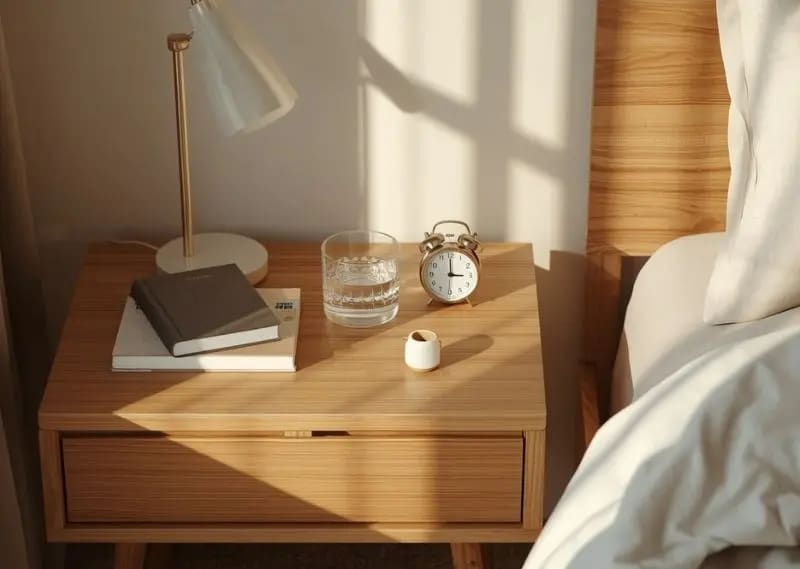
A cluttered nightstand creates low-level mental stress. Even if you don't consciously notice the pile of items next to you, your brain registers the disorder. Over time, that kind of background noise adds up and affects your ability to wind down at night and wake up feeling clear in the morning.
The goal is to keep only what truly belongs there — and nothing more.
Examples of productive nightstand items:
- A book you're currently reading
- A small journal or notepad for evening thoughts
- A glass of water
- Your alarm clock or phone (face down, ideally)
- A small lamp
Everything else — receipts, old magazines, extra chargers, random objects that ended up there — should find a different home.
A clean nightstand sends a simple message to your brain: this is a space for rest and intention. That signal alone can help you fall asleep faster and wake up with a slightly better mental start. It takes two minutes to maintain once you build the habit.
3. Use Hidden Storage to Reduce Visual Noise
One of the biggest reasons bedrooms feel overwhelming is because too much is visible at once. Clothes on chairs, boxes in corners, random items stacked on shelves — all of it competes for your attention, even when you're trying to relax.
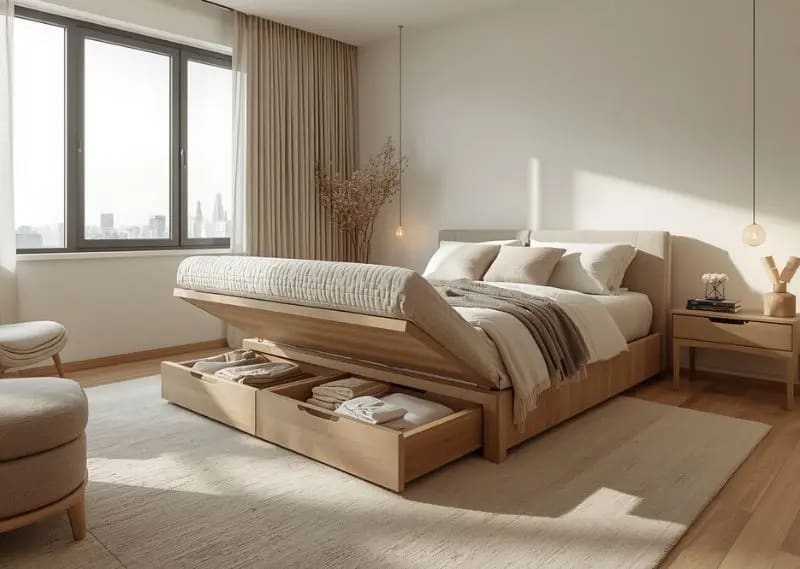
Hidden storage solves this without requiring you to get rid of everything. The idea is simple: if it doesn't need to be seen, put it somewhere it won't be.
Smart hidden storage options:
- Under-bed storage — flat bins or rolling drawers work well for seasonal clothes, extra linens, or shoes
- Storage benches — great at the foot of the bed, they hold items inside while giving you somewhere to sit
- Drawer organizers — inside dresser drawers, they keep things sorted so you're not digging through chaos every morning
- Ottoman storage — stylish and functional, especially in smaller rooms
Benefits of reducing visual clutter:
When your eyes aren't constantly landing on objects out of place, your nervous system settles. You feel calmer in the space. Decision fatigue decreases because there's less to mentally process. Many people report sleeping better after simply tidying up what's visible in their room — not because anything changed physically, but because the visual quietness changed how they felt.
4. Design a Bed Area That Encourages Quality Sleep
Productivity doesn't start in the morning — it starts the night before, with how well you sleep. A bed area designed for genuine rest is one of the most high-impact investments you can make in your daily performance.

Start with your bedding. Natural materials like cotton or linen breathe better and tend to support deeper sleep. Layers work better than one heavy blanket because you can adjust easily through the night.
Room temperature also plays a big role. Most sleep research points to a slightly cool room — around 65 to 68°F (18 to 20°C) — as the sweet spot for deep, restorative sleep. A fan, cracked window, or adjustable thermostat can help you get there.
Sleep-friendly layout tips:
- Position your bed away from the door if possible — this creates a sense of security
- Keep the area around the bed clear and easy to move through
- Use blackout curtains or a sleep mask to block early morning light if needed
- Remove screens from within arm's reach of the bed
Why better sleep improves productivity:
When you sleep well, your memory consolidates better, your focus sharpens, and your emotional regulation improves. You make better decisions, feel less reactive, and have more energy to spend on things that matter. Fixing your sleep environment is one of the most direct paths to a more productive day.
5. Add a Habit-Tracking Wall or Bulletin Board
There's something uniquely motivating about being able to see your progress. A habit-tracking wall or simple bulletin board gives your goals a physical presence in your life — and that visibility often makes the difference between sticking with something and drifting away from it.
You don't need anything complicated. A corkboard, a section of wall with some removable strips, or even a framed whiteboard can serve this purpose well.
What to put on it:
- A monthly habit calendar with checkboxes you mark off daily
- Your top three to five current goals written clearly
- A simple progress bar for a longer-term goal
- One or two quotes or reminders that keep you grounded
Why it works:
Every time you walk past your board and see an unbroken streak of checkboxes, you feel a small pull to keep it going. Behavioral psychology calls this the "chain effect" — the visual record of consistency becomes its own motivation. You don't want to break the chain.
The board also acts as a daily check-in without requiring much time. A ten-second glance reminds you of what you're working toward. Over weeks and months, that quiet reminder adds up to real, lasting change. Keep the board somewhere you'll naturally look at it — near your desk, above your dresser, or beside your door.
6. Maximize Natural Light Exposure
Natural light is one of the most underappreciated tools for energy, mood, and focus. Your body runs on a circadian rhythm — a natural internal clock — and light is the primary signal it uses to know when to be alert and when to wind down.

Getting natural light in the morning, especially within the first hour of waking, helps set that rhythm for the whole day. It boosts alertness, improves mood, and supports better sleep the following night.
How to bring more natural light into your bedroom:
- Use light, sheer curtains during the day to let sunlight in while keeping some privacy
- If your desk is in your room, place it near the window rather than facing a wall
- Avoid heavy drapes in rooms where morning light would be beneficial
- Keep windows clean — it sounds simple, but it genuinely makes a difference in how much light comes through
Energy and focus benefits:
Natural light exposure increases serotonin levels, which supports a more stable, positive mood and higher mental alertness. People who get regular morning light tend to fall asleep more easily at night because their sleep-wake cycle is better regulated. It's one of those rare upgrades that improves both your daytime performance and your nighttime rest at the same time, with no cost involved.
7. Create a Tech-Controlled Environment
Technology isn't the enemy of productivity — but how and where you use it in your bedroom can quietly undermine your sleep, your focus, and your ability to disconnect from constant stimulation.
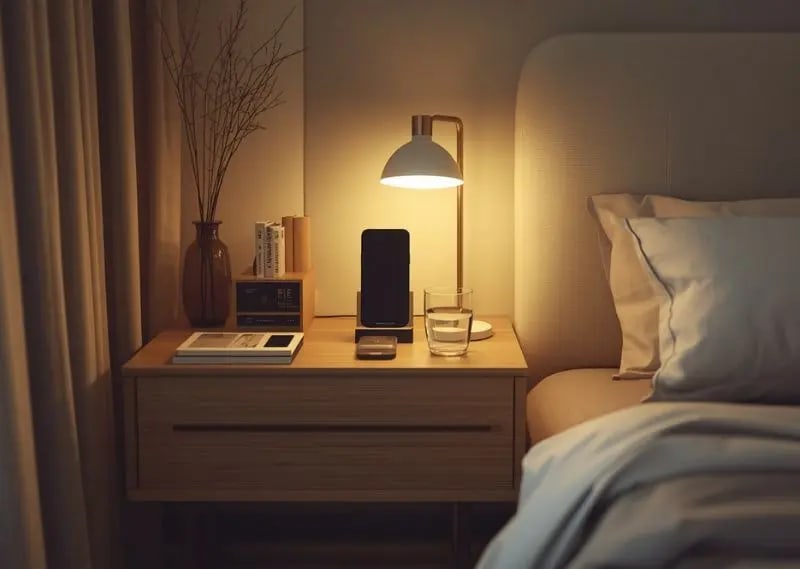
The bedroom is meant to be a space for rest, reflection, and morning intention. When phones and screens become central to that space, those functions get crowded out.
Smart tech habits for the bedroom:
- Charging station: Set up one designated spot for charging — ideally outside the bedroom or at least across the room from your bed. This removes the temptation to scroll through your phone right before sleep and first thing in the morning.
- Screen-free sleeping zone: Treat the area around your bed as a no-screen zone. Even keeping your phone face down on the nightstand is a step in the right direction.
- Limit TV in the bedroom: If possible, avoid having a television in the room. The habit of falling asleep to a screen fragments sleep quality significantly.
Digital habit improvements:
When you're not reaching for your phone every few minutes in bed, your mind gets real downtime. You fall asleep faster, wake up less groggy, and start your morning from a calmer baseline rather than immediately diving into notifications. That small boundary has a surprisingly large effect on overall daily focus.
8. Organize Clothing for Faster Morning Routines
Mornings set the tone for the rest of the day. When you start by standing in front of a disorganized closet, frustrated and indecisive, you've already spent mental energy on something that shouldn't require any. Organizing your clothing thoughtfully can reclaim that energy for things that actually matter.

Practical clothing organization ideas:
- Capsule wardrobe approach: Reduce your wardrobe to items you genuinely wear and that work well together. Fewer choices actually lead to faster, more confident decisions.
- Clothing categories: Organize by type (tops, bottoms, workwear, casual) and by color within each category. You'll find what you need in seconds instead of minutes.
- Weekly outfit planning: Spend five minutes on Sunday deciding what you'll wear Monday through Friday. Hang those outfits together or fold them in order. Each morning becomes effortless.
- Visible, accessible storage: Hooks on the back of doors, clear drawer dividers, and labeled shelves all reduce the time you spend searching.
Time-saving advantages:
A smoother morning routine creates psychological momentum. When the first tasks of your day go easily, you feel capable and organized — and that feeling carries forward. Removing friction from small decisions like getting dressed is a simple way to start your day from a position of calm rather than mild chaos.
9. Use Productivity-Friendly Colors and Decor
The colors and decor in your bedroom affect how you feel — often in ways you don't consciously notice. Color psychology isn't just a design concept; there's real research behind how different shades influence mood, energy levels, and mental clarity.

Bright, stimulating colors might feel energizing in a gym or an office, but in a bedroom, they tend to activate the nervous system in ways that work against rest and calm focus.
Best color choices for a productive bedroom:
- Soft neutrals: Warm whites, light beiges, and soft grays create a clean, calm backdrop that doesn't compete for your attention
- Earth tones: Muted terracotta, sage green, soft clay, and dusty blue all support a grounded, settled feeling
- Avoid overly bright or saturated tones: Bold reds, bright oranges, or neon accents tend to raise alertness — helpful elsewhere, but disruptive in a sleep and recovery space
Decor principles:
Keep decorative items minimal and intentional. A few meaningful pieces — a plant, a framed photo, one piece of art you genuinely love — contribute more to a calm atmosphere than a wall covered in many items. The goal is a room that feels like yours without feeling crowded.
When your bedroom is visually calm, your nervous system tends to settle faster, making it easier to transition between focused work and deep rest.
10. Establish a Reading and Reflection Space
One of the most rewarding habits you can build is an evening routine that helps you close out the day thoughtfully rather than just collapsing into bed after staring at a screen. A small reading and reflection corner in your bedroom makes that kind of routine much easier to sustain.
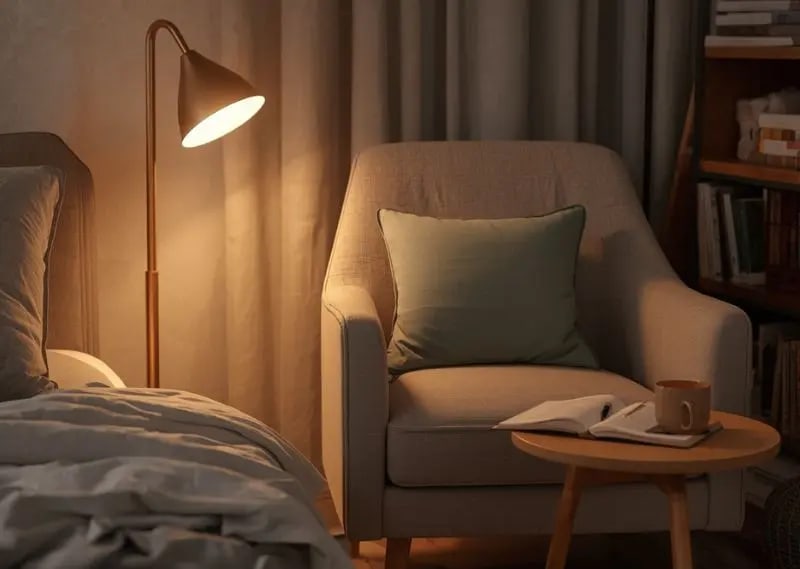
What you need:
- A comfortable chair or floor cushion with back support
- A small side table or stool for a lamp and a cup of tea
- A modest bookshelf — even three to five books you're actively reading or returning to
- A journal for evening notes, reflections, or tomorrow's intentions
You don't need much space. Even a corner with a chair and a lamp creates enough of a distinct zone that your brain begins to associate that spot with winding down in a meaningful way.
Personal development benefits:
Reading before bed — even for just fifteen to twenty minutes — reduces stress, expands your thinking, and feeds your curiosity in ways that screens rarely do. Reflection journaling helps process the day, clarifies your priorities, and makes the transition to sleep smoother. People who build evening reflection habits tend to feel more intentional about their lives over time.
It's a small space that holds real potential for growth, one quiet evening at a time.
Common Bedroom Mistakes That Hurt Productivity
Even with the best intentions, certain bedroom habits can quietly work against you. Here are the most common ones worth addressing:
Excess clutter is the biggest offender. When items pile up on every surface, your brain never fully relaxes because there's always visual information to process. Regular decluttering — even five minutes a day — prevents this from building up.
Poor lighting affects both mood and sleep. Harsh overhead lighting in the evening keeps your brain alert when it should be winding down. Relying only on dim lighting during the day makes your space feel heavy and low-energy. A mix of adjustable, layered lighting solves both problems.
Too many electronics in the bedroom — televisions, tablets, laptops, and phones within reach — introduce constant temptation and disrupt sleep quality even when you're not actively using them.
Lack of storage forces things to live out in the open, which contributes directly to visual clutter and the feeling that your space is out of control.
Overdecorating is a quieter problem, but a real one. When every wall and surface is covered, the room stops feeling restful and starts feeling busy. Less truly is more in a bedroom designed to support focus and recovery.
Frequently Asked Questions
Q1. How can a bedroom improve productivity?
Your bedroom environment shapes your habits more than most people realize. When it's organized, calm, and intentionally designed, it supports better sleep, reduces daily friction, and creates mental clarity that carries into the rest of your day. Small changes — like a clear nightstand, natural light, or a dedicated planning space — make it easier to build and maintain productive habits without relying on willpower alone.
Q2. What is the best bedroom layout for focus and organization?
A layout that separates rest zones from activity zones tends to work best. Keep the area around your bed clear and calm. Place any desk or planning corner away from the bed, ideally near a window. Use storage solutions that keep most items hidden. The more intentional each zone is, the easier it becomes for your brain to shift between rest, focus, and morning routine.
Q3. Which bedroom colors support productive habits?
Soft neutrals, muted earth tones, and cool gentle hues like sage green or dusty blue are the most supportive choices. These colors create a calm, grounded atmosphere without overstimulating the nervous system. Bright, saturated colors tend to increase alertness — which can be counterproductive in a space meant for both rest and quiet focus.
Q4. How do I keep my bedroom clutter-free every day?
The most effective approach is building a short daily tidying habit — even five minutes before bed or in the morning. Pair this with good storage systems so everything has a clear home. When there's no designated place for an item, it ends up on a surface. Creating those homes is the underlying solution.
Q5. What bedroom items help build better habits?
A few genuinely useful items include a physical planner or journal, a habit tracker board, a reading chair or corner, a charging station outside of arm's reach of the bed, and good layered lighting. These aren't about filling the space — they're about giving your best intentions a physical structure to lean on.
Q6. Can a minimalist bedroom increase productivity?
Yes, in most cases it can. Minimalism in the bedroom reduces visual noise, which lowers background mental stress. With fewer things competing for your attention, it's easier to focus, easier to relax, and easier to find what you need quickly. You don't have to strip the room bare — even moving toward a simpler, more intentional space tends to have a noticeable effect on how you feel and function.
Conclusion
Your bedroom is more than just a place to sleep. It's the environment where your day begins and ends — and the way it's designed quietly influences every habit in between.
These ten ideas aren't meant to be tackled all at once. Real, lasting change comes from small improvements made consistently over time. Start with one area that feels most relevant to where you are right now. Maybe it's clearing your nightstand. Maybe it's setting up a simple habit board. Maybe it's finally sorting out your closet so your mornings run smoother.
Each change you make adds up. A bedroom that's organized, calm, and intentionally designed doesn't just look better — it works for you. It removes the small daily frictions that drain energy, supports deeper sleep, and makes it easier to follow through on the things you care about.
You don't need a perfect room. You just need a room that's working in the same direction you are. Start with one change today, see how it feels, and build from there. The environment you create will shape the habits you keep.
🌿 Outdoor Living & Landscaping Ideas
• 25 Stunning Landscaping Ideas for Your Lawn & Garden (Backyard, Patio & Outdoor Spaces 2026)
• 25 Pool Designs That Will Transform Your Backyard in 2026 (Luxury to Budget Ideas)
• 30 Cozy Patio Decor Ideas: Create a Relaxing Outdoor Oasis at Home
• 15 Best Furniture Sets for Every Space: Patio, Living Room, Bedroom & Outdoor Living
🛋️ Living Room & Small Space Design
• Transform Your Space: Best Floor Lamps for Living Room in 2026
• 15 Best Sofas for Small Living Rooms That Maximize Space & Style
• Best Space Saving Furniture for Living Room in 2026 for Small Apartments
• Small Room? These Cozy Corner Ideas Will Completely Change How It Feels
🛏️ Bedroom Decor & Organization
• Aesthetic Bedroom Ideas for Small Rooms: Dreamy & Cozy Decor Guide
• Floating Shelves for Bedroom: Best Picks + Stylish Ideas (2025 Guide)
• Small Bedroom Ideas for 2026: Maximize Style & Space
• 10 Bedroom Wall Decor Ideas for Small Rooms (Budget-Friendly & Modern 2026)
• 20 Best Wall Decor Ideas for Bedroom Walls (Stylish & Easy Upgrades)
• 5 Boho Bedroom Wall Décor Ideas for 2026
• Tired of Your Bedding Letting You Down? Meet Your Dream All-Season Solution.
🏡 Home Decor & Interior Inspiration
• 20 Japandi Interiors That Perfectly Blend Scandinavian Simplicity & Japanese Elegance
• 23 Iranian Home Decor Interior Design Ideas That Bring Timeless Elegance
• 21 Artificial Flora for Home Decor (Stylish, Low-Maintenance Greenery for Every Room)
• 10 Stylish Neutral Home Office Designs for Men That Boost Focus and Comfort
🧺 Home Organization & Smart Storage
• Ultimate Home Organization Guide for Beginners (2026)
• 7 Genius Storage Tricks That Double Your Toddler's Floor Space
🛁 Bathroom & Seasonal Decor
• 7 Bathroom Remodel Design Ideas to Transform Your Space in 2026
• 7 Valentine Home Décor Ideas to Create a Romantic, Cozy & Pinterest-Worthy Space
• Top 5 Valentine’s Day Home Decor Ideas to Create a Romantic Atmosphere


0 Comments