
1. Introduction
There is a widespread myth that only large bedrooms can be beautiful. Scroll through any design magazine or Pinterest board and you might feel that a dreamy, aesthetic space requires square footage you simply do not have. That belief is completely wrong — and this guide exists to prove it.
Small rooms come with real challenges. You are working with limited floor space, which means furniture choices matter more. Clutter accumulates faster because there is nowhere to hide it. Lighting can feel harsh or dim without the right layering. And it is easy to feel like every design decision is a compromise between style and practicality.
But here is what experienced interior decorators and real people living in compact spaces have quietly figured out: constraints force creativity, and creativity produces the most memorable rooms. The coziest, most emotionally resonant bedrooms in the world are rarely the largest ones. They are the ones where every inch is intentional.
This guide is written specifically for students living in dorm rooms or off-campus apartments, apartment dwellers who rent compact spaces, small homeowners who want their bedroom to feel like a genuine retreat, and anyone who has looked at their room and thought, "This could be so much better."
You will find actionable, specific, and genuinely useful ideas across color, furniture, lighting, decor, organization, and budget. By the end, your small bedroom will not just look aesthetic — it will feel like a place you actually want to be.
2. What Makes a Bedroom "Aesthetic"?
The word "aesthetic" gets thrown around loosely, but in the context of bedroom design, it means something specific: a space where every visual element works together to produce a feeling. Not just a room that looks nice in a photo, but one that evokes an emotion when you walk into it — calm, warmth, safety, inspiration.
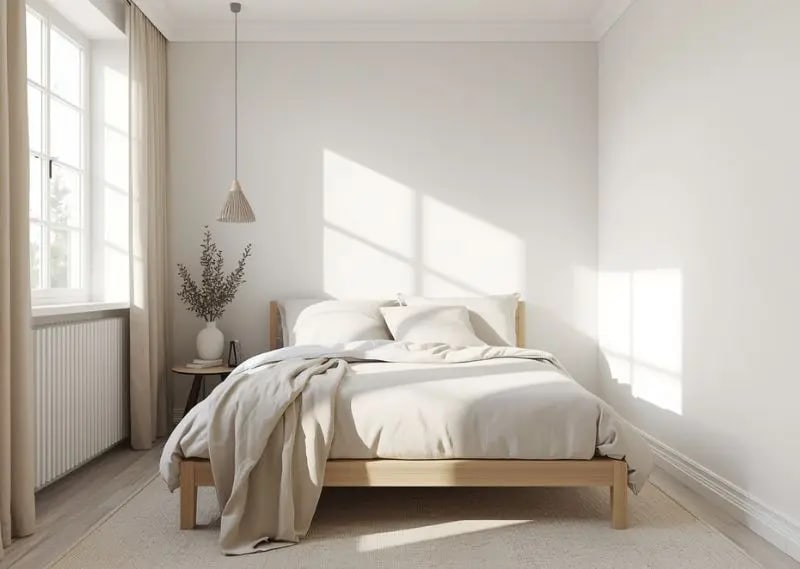
A truly aesthetic bedroom is built on four pillars.
Color palette is the foundation. The colors you choose determine how the room feels before you even look at the furniture. Warm, muted tones invite relaxation. Cool pastels encourage calm focus. Earthy hues create groundedness. The key is coherence — your walls, bedding, and decor should all speak the same color language.
Lighting is what separates a beautiful room from a truly atmospheric one. Overhead ceiling lights are functional but almost never aesthetic on their own. Layered lighting — soft lamps, warm fairy lights, perhaps an LED strip tucked behind the headboard — gives a room mood and dimension. Lighting is what makes your bedroom feel different at 9 p.m. than it does at 9 a.m., and that transformation is central to the aesthetic experience.
Minimal clutter is non-negotiable. This does not mean your room must be sterile or bare. It means that every visible object should either serve a function or bring you genuine joy. Clutter is visual noise. It breaks the calm that an aesthetic bedroom depends on.
Personal touches are what separate a well-decorated room from your well-decorated room. Plants you chose, photos that mean something to you, a handmade wall hanging, a worn book on the nightstand — these are the details that give a room soul. Without them, even a perfectly designed space feels like a hotel room.
3. Best Color Schemes for Small Aesthetic Bedrooms
Color is the single most powerful tool you have in a small bedroom, and it costs almost nothing to change. Here is how to use it well.
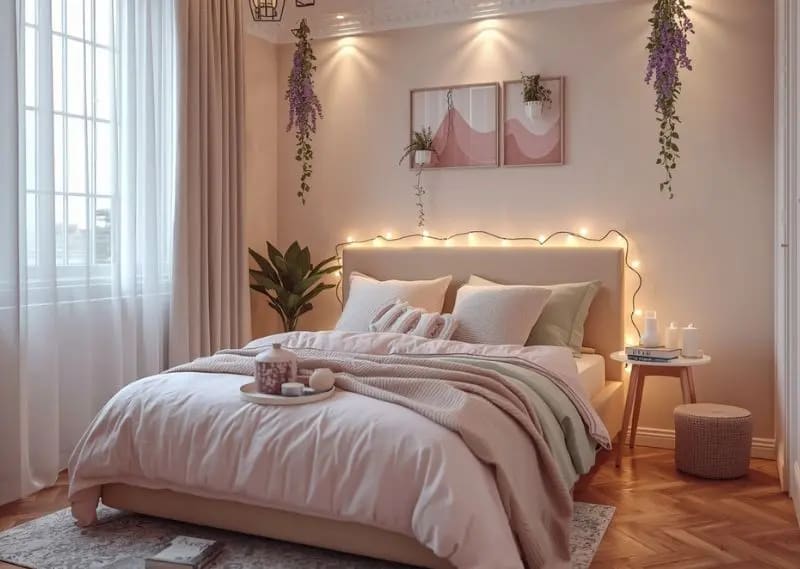
Neutral Tones: Beige, White, and Cream
Neutral palettes are perennially popular for small rooms because they work on a psychological level. White and cream walls reflect light, making the room feel open and airy. Beige adds warmth without visual weight. When walls, bedding, and furniture all operate in the same neutral family, the eye reads the room as unified and spacious rather than crowded.
The mistake people make with neutrals is thinking they are boring. They are not — they are a canvas. A cream-walled room with textured linen bedding, a rattan side table, and a single trailing plant in a terracotta pot is rich with visual interest. The neutrals let the textures and shapes do the talking.
Soft Pastels: Pink, Sage Green, and Lavender
Pastels are the go-to palette for a soft, dreamlike aesthetic. Dusty pink creates warmth and romance. Sage green is calming without being cold, and it pairs beautifully with natural wood and wicker. Lavender adds a gentle, slightly whimsical quality that works especially well in rooms that get natural light.
The key with pastels is to stay in the same temperature family. Warm pastels (blush, peach, butter yellow) work together. Cool pastels (sage, lavender, powder blue) work together. Mixing warm and cool pastels without intention can make a room feel unsettled.
Earthy Aesthetic: Brown, Olive, and Terracotta
The earthy palette has grown dramatically in popularity because it taps into something deeply comforting — it feels like the natural world brought indoors. Terracotta walls or accents have a sun-baked warmth. Olive green anchors a room without darkening it. Deep browns in wood furniture or woven textiles add richness.
This palette works particularly well with natural materials: jute rugs, linen cushions, unfinished wood, dried pampas grass. If the neutral palette is a whisper, the earthy palette is a warm conversation.
Pro Tip: In any palette, lean toward lighter shades on your walls and ceiling. Light colors expand visual space. Save deeper, richer shades for accents — a throw blanket, a cushion, a single statement wall. This principle alone can make a small room feel noticeably larger.
4. Space-Saving Furniture Ideas
In a small bedroom, furniture is not just decoration — it is architecture. Every piece you bring in changes how the space flows, how much floor you can see, and ultimately how large the room feels.
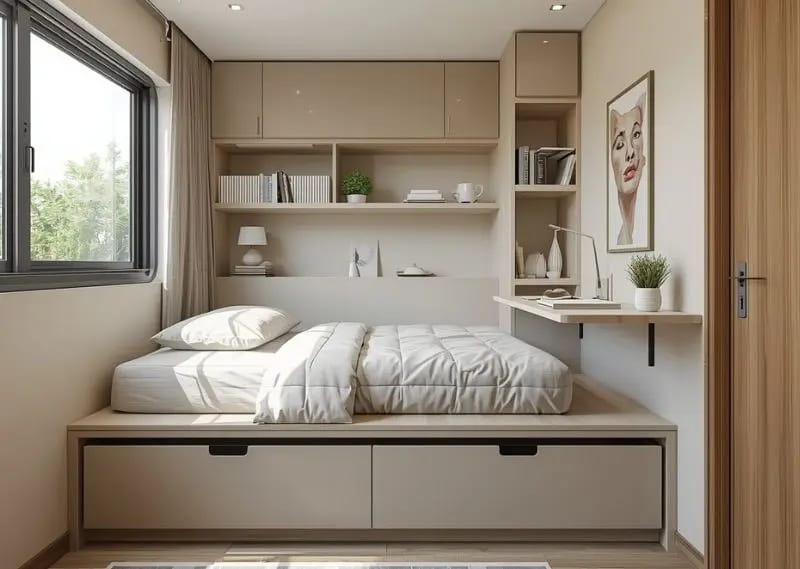
Multi-Functional Furniture
A storage bed is one of the most transformative investments you can make in a small room. The space under a standard bed is often wasted. A bed with built-in drawers or a hydraulic lift mechanism converts that dead zone into meaningful storage for off-season clothing, extra bedding, or books.
A foldable or wall-mounted desk is equally transformative for students and remote workers. When not in use, it folds flat against the wall, reclaiming floor space that a traditional desk would permanently occupy.
Ottoman storage stools serve triple duty: seating, footrest, and hidden storage container. A narrow bedside table with shelves or drawers replaces a bulky dresser. Even your clothing storage can multi-task — a wardrobe with a built-in mirror eliminates the need for a separate full-length mirror.
Wall-Mounted Shelves
Shelves mounted on walls take advantage of vertical space that floor furniture ignores. In a small room, the walls above furniture height — from roughly 5 feet up to the ceiling — are almost always underutilized. Floating shelves in this zone give you display and storage space without adding any footprint to the floor.
Float shelves above your desk for books and supplies. Install them above the bed for plants and decorative objects. Use them in corners, which are notoriously difficult to furnish with floor pieces but ideal for corner-bracketed shelves.
The Less Is More Principle
This is perhaps the most counterintuitive advice: remove furniture before you add more. Many small bedrooms are not cramped because they are small — they are cramped because they have too many pieces in them. A dresser that is half-empty, a chair that holds clothes but never gets sat in, a second nightstand that holds only a lamp — these are candidates for removal.
When each piece of furniture is truly necessary and earns its place, the room breathes. You do not need a full bedroom suite; you need the pieces that actually serve your life.
5. Cozy Lighting Ideas for a Dreamy Vibe
Lighting is the most underestimated element of bedroom aesthetics. You can have perfect furniture and beautiful colors, and overhead fluorescent lighting will undo all of it. Conversely, thoughtful lighting can make an almost plain room feel magical.
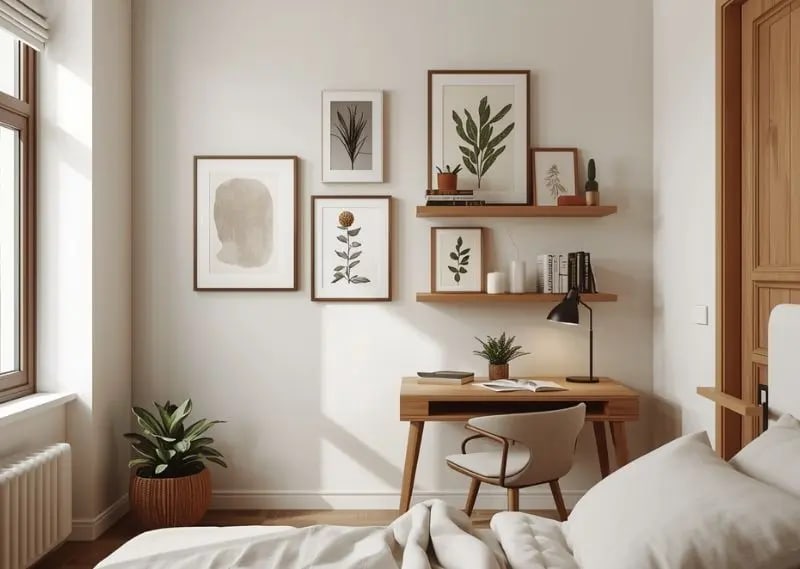
Fairy lights remain a staple of the aesthetic bedroom because they work. Warm white fairy lights strung along a wall, draped over a canopy, or wound around a headboard create a gentle ambient glow that no other light source quite replicates. They are inexpensive, versatile, and immediately transform the emotional character of a space.
LED strip lights have matured well beyond the garish multicolor strips of the mid-2010s. Modern warm-white or amber LED strips placed behind a headboard, under a bed frame, or along the top of a bookshelf create beautiful indirect lighting — a soft halo that adds dimension without any visible light source.
Bedside lamps with warm-toned bulbs (look for bulbs in the 2700K–3000K range) are essential for reading and winding down. The lamp itself is also a decor opportunity: a rattan shade, a ceramic base in your palette's accent color, or a simple arch lamp adds visual interest while serving a function.
Natural light is the most beautiful light available, and many small rooms fail to make the most of it. Keep window treatments light and sheer rather than heavy and opaque. Position your mirror to catch and bounce daylight into darker corners. Avoid placing tall furniture directly in front of windows.
Placement matters enormously. Lights behind the bed create a halo effect that feels luxurious. Lights near the ceiling corners bounce light off two surfaces and fill the room evenly. Lights at floor or under-furniture level create a floating, weightless atmosphere. Use a combination rather than relying on a single source.
6. Aesthetic Wall Decor Ideas
In a small bedroom, walls are prime real estate. Used well, they add personality and depth. Used poorly, they make the room feel cluttered and smaller. The goal is intentional rather than maximal.
Gallery walls work beautifully when they are curated rather than collected. Choose prints with a unifying thread — same color palette, same framing style, or same theme. A gallery wall in matching thin black frames with a mix of botanical prints, abstract shapes, and personal photos reads as considered and cohesive. The same prints in mismatched frames of varying sizes reads as chaotic.
Wall shelves with decor serve double duty, combining storage with visual interest. A shelf holding a small plant, a candle, and a favorite book is more interesting and more personal than a poster in the same space.
Hanging plants add life and visual softness in a way no other decor can. A pothos, a string of pearls, or a trailing ivy hung in a macrame hanger near the window is both beautiful and alive. It adds color, texture, and a quality of care — this person tends to living things — that resonates deeply.
Tapestries and fabric art work well in small rooms because they add texture without adding weight or taking up floor space. A woven wall hanging, a block-print textile, or even a large piece of fabric in your palette's colors can anchor a wall the way a large artwork would, at a fraction of the cost.
The golden rule: Leave negative space. A wall with one well-chosen piece and generous breathing room around it looks far more sophisticated than a wall packed to its edges.
7. Bedding and Textiles for a Cozy Feel
The bed is the centerpiece of any bedroom, and in a small room it often occupies a significant portion of the floor. That means your bedding is doing a lot of visual work. Make it count.
Layering is the key to that effortlessly cozy, "I want to climb into that bed" quality. Start with fitted sheets, add a flat sheet or duvet, then layer a lightweight blanket in a complementary texture, then add cushions in two or three sizes. The layers do not need to match exactly — variation in texture is what creates depth and richness.
Texture selection matters as much as color. Cotton percale is crisp and cool. Linen is relaxed, slightly rumpled, and gains character over time. Waffle-weave cotton adds dimension. Faux fur or chunky-knit throws add warmth and tactile luxury. Mixing two or three textures in your bedding keeps the eye moving without introducing more colors.
Color coordination for bedding in a small room should echo the wall palette rather than contrast dramatically with it. If your walls are warm cream, bedding in warm white, soft tan, and dusty blush will feel harmonious. Bedding in navy or forest green against the same walls will feel abrupt. The goal is a room where everything belongs together.
One practical secret: a large throw pillow or bolster placed against the headboard elevates even simple bedding. It is the single lowest-cost, highest-impact upgrade most people do not think about.
8. Small Room Organization Hacks
An aesthetic bedroom that descends into chaos after a week is not actually functional. These organization habits keep the look intact.
Under-bed storage should be structured, not a dumping ground. Clear bins with labels, vacuum-seal bags for seasonal clothing, or a dedicated rolling drawer unit keeps this zone usable. The discipline is to put things back — the system only works if the access is easy enough that you use it.
Baskets and organizers on open shelves make storage beautiful. A wicker basket holding extra blankets, a ceramic tray corralling your nightstand items, a linen-lined bin for stray chargers and accessories — these transform cluttered surfaces into curated still lifes.
The decluttering principle that works best in small rooms: anything that does not add value to your daily life or genuine beauty to the space does not belong in your bedroom. This is a harder standard than it sounds. That stack of textbooks, the exercise equipment you might use someday, the extra chair with no purpose — each one costs you visual space and emotional calm every time you look at it.
A useful practice: walk through your room every two weeks and identify one thing to remove. Over a few months, the cumulative effect is profound.
9. Add Greenery for a Fresh Aesthetic
Plants bring something to a bedroom that no manufactured object can replicate: life. They move, they grow, they change. A room with plants has a different quality of aliveness than a room without them.
For small spaces, vertical and hanging plants are particularly useful because they add greenery without consuming floor space. A pothos in a hanging planter near the window, a string of hearts on a wall-mounted shelf, or an air plant mounted directly to the wall occupies visual space without physical space.
Small desktop plants like succulents, a small peace lily, or a snake plant in a beautiful pot can sit on a nightstand or floating shelf. The pot itself is decor — choose one that fits your palette.
For those who travel frequently or lack confidence with plants, high-quality artificial plants have improved dramatically. A good faux eucalyptus, pampas grass, or trailing ivy is indistinguishable from the real thing at a glance and requires nothing but an occasional dusting.
10. Mirror and Layout Tricks to Make the Room Look Bigger
Mirrors are one of the most powerful spatial tools in interior design. They do not create more space, but they convincingly simulate it.
A large mirror — ideally at least half as tall as your wall — visually doubles the space it reflects. Leaning a full-length mirror against the wall rather than hanging it flat gives the impression of a doorway into another room. A substantial mirror above a dresser or on a closet door adds light and depth simultaneously.
Mirror placement opposite a window is the highest-value positioning. It reflects natural light back into the room, making both the room and the light source feel larger. On a wall opposite or adjacent to a window, a mirror can brighten a dark corner more effectively than any lamp.
Furniture layout in a small room should keep the floor visible. Furniture pushed against walls maximizes open floor space in the center — and visible floor is perceived as available space. Avoid placing furniture at angles, which tends to feel chaotic in compact rooms. Keep pieces aligned to the walls and to each other.
One often-overlooked trick: keep the path from the door to the bed clear. When you can move through a room easily, you experience it as spacious even when it is small.
11. Budget-Friendly Aesthetic Bedroom Ideas
You do not need money to have a beautiful room. You need intention.
DIY wall art is one of the highest-value creative investments. Paint abstract shapes on canvas, frame fabric samples or pages from an old book, create a simple string art piece or a hand-lettered quote. The imperfection of handmade work adds authenticity that bought prints can never replicate.
Printable posters from platforms like Etsy or free design sites allow you to access beautiful artwork for the cost of printing. A clean design printed on cardstock and placed in a simple frame from a thrift store is nearly indistinguishable from a store-bought poster.
Thrift store and secondhand decor is the insider approach to aesthetic rooms. Ceramic vases, wooden trays, interesting frames, vintage textile — thrift stores carry all of these at a fraction of retail prices. The key is to select pieces that fit your palette and ignore the noise.
Repurposing old furniture with paint, new hardware, or creative repositioning transforms pieces that feel dated into things that feel fresh. A painted wooden crate becomes a nightstand. An old ladder becomes a blanket display. A suitcase becomes an unusual side table. These choices also add character that mass-produced furniture cannot provide.
12. Quick Aesthetic Bedroom Setup Checklist
Before you start decorating or redecorating, use this checklist to ensure all the key elements are in place.
- Soft color palette chosen and applied consistently across walls, bedding, and major accents ✔
- Layered cozy lighting with at least two sources (lamp + fairy lights or LED strips) ✔
- Minimal, multi-functional furniture with no pieces that do not earn their place ✔
- Wall decor installed with intentional spacing — balanced, not overcrowded ✔
- Textured bedding with at least two layers and a mix of materials ✔
- At least one plant or natural element present ✔
- Organizational systems in place (under-bed storage, baskets, surface trays) ✔
- Mirror positioned to maximize light and depth ✔
- Floor kept as clear as possible ✔
If you can check every item, your room will feel both aesthetic and functional.
Conclusion
Small space does not mean small dreams.
The bedroom ideas in this guide are not about spending a lot of money or waiting until you have a bigger place. They are about making conscious, creative choices with what you have — choosing colors that make the space feel expansive, light that makes it feel warm, furniture that respects your floor, and decor that is genuinely yours.
The most important thing to remember is this: an aesthetic bedroom reflects the person who lives in it. Your palette, your plants, your handmade wall art, your layered blankets — these are expressions of how you want to feel when you wake up and when you go to sleep. No design guide can decide that for you. It can only give you the tools.
Start with one thing. Paint a wall, rearrange the furniture, hang some fairy lights. Small changes compound, and before long, you will walk into your room and feel exactly the way you wanted to feel when you started.
Your small room can be your favorite room. Go make it that.
FAQ Section
How can I make my small bedroom aesthetic?
Start with color. Choose a soft, cohesive palette and apply it consistently across your walls, bedding, and decor. Then address lighting — layer warm sources rather than relying on a single overhead light. Remove anything that clutters the space, and add one meaningful personal touch: a plant, a piece of art you love, a textured throw. Aesthetic rooms are built layer by layer, not all at once.
What colors make a room look bigger?
Light, cool, and neutral colors consistently make rooms feel more spacious. Whites, creams, light grays, and soft pastels reflect light and avoid creating visual barriers. The more a wall color contrasts with the floor and furniture, the more defined — and therefore limited — the space feels. When walls and floors share a similar tonal range, boundaries blur and the room expands visually.
How do I decorate a bedroom on a low budget?
Focus your spending on the highest-impact items first: a good set of sheets and a throw blanket transform a bed more than almost anything else, and quality bedding can be found affordably. After that, look to printable art, thrift stores for ceramics and frames, and DIY projects for wall decor. Fairy lights cost very little and add enormous atmosphere. The most budget-friendly move of all is decluttering — removing things costs nothing and immediately improves the room.
Save & Share
Love these ideas? Save this post to your Pinterest boards so you can come back to it when you are ready to tackle each section. Aesthetic bedroom transformations are best done in stages — save this as your long-term reference.
If this guide helped you see your small room differently, share it with a friend who is dealing with the same challenge. The best design ideas spread the same way great rooms are built: one thoughtful recommendation at a time.
Related posts you might enjoy:
- How to Create a Study Nook in a Small Bedroom
- The Best Plants for Low-Light Bedrooms
- How to Layer Lighting in Any Room
- Thrift Store Decor Finds That Look Expensive
🌿 Outdoor Living & Landscaping Ideas
• 25 Stunning Landscaping Ideas for Your Lawn & Garden (Backyard, Patio & Outdoor Spaces 2026)
• 25 Pool Designs That Will Transform Your Backyard in 2026 (Luxury to Budget Ideas)
• 30 Cozy Patio Decor Ideas: Create a Relaxing Outdoor Oasis at Home
• 15 Best Furniture Sets for Every Space: Patio, Living Room, Bedroom & Outdoor Living
🛋️ Living Room & Small Space Design
• Transform Your Space: Best Floor Lamps for Living Room in 2026
• 15 Best Sofas for Small Living Rooms That Maximize Space & Style
• Best Space Saving Furniture for Living Room in 2026 for Small Apartments
• Small Room? These Cozy Corner Ideas Will Completely Change How It Feels
🛏️ Bedroom Decor & Organization
• Floating Shelves for Bedroom: Best Picks + Stylish Ideas (2025 Guide)
• Small Bedroom Ideas for 2026: Maximize Style & Space
• 10 Bedroom Wall Decor Ideas for Small Rooms (Budget-Friendly & Modern 2026)
• 20 Best Wall Decor Ideas for Bedroom Walls (Stylish & Easy Upgrades)
• 5 Boho Bedroom Wall Décor Ideas for 2026
• Tired of Your Bedding Letting You Down? Meet Your Dream All-Season Solution.
🏡 Home Decor & Interior Inspiration
• 20 Japandi Interiors That Perfectly Blend Scandinavian Simplicity & Japanese Elegance
• 23 Iranian Home Decor Interior Design Ideas That Bring Timeless Elegance
• 21 Artificial Flora for Home Decor (Stylish, Low-Maintenance Greenery for Every Room)
• 10 Stylish Neutral Home Office Designs for Men That Boost Focus and Comfort
🧺 Home Organization & Smart Storage
• Ultimate Home Organization Guide for Beginners (2026)
• 7 Genius Storage Tricks That Double Your Toddler's Floor Space
🛁 Bathroom & Seasonal Decor
• 7 Bathroom Remodel Design Ideas to Transform Your Space in 2026
• 7 Valentine Home Décor Ideas to Create a Romantic, Cozy & Pinterest-Worthy Space
• Top 5 Valentine’s Day Home Decor Ideas to Create a Romantic Atmosphere


0 Comments