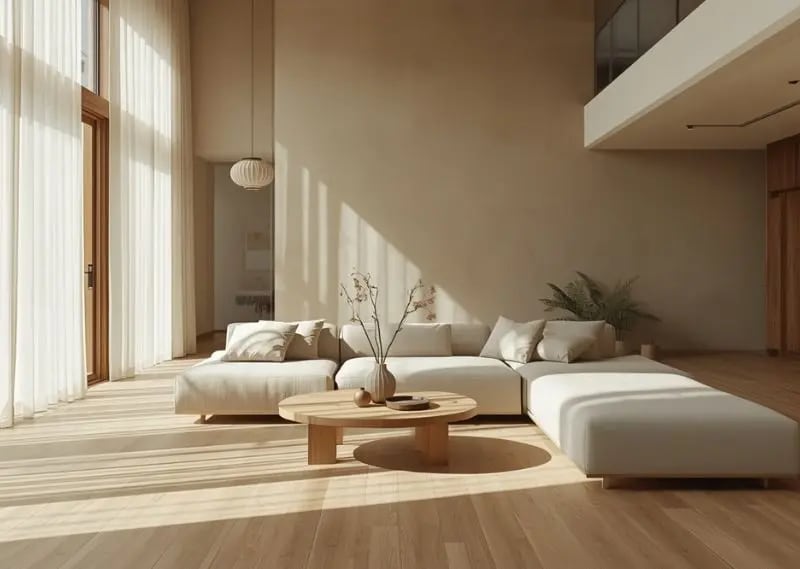
I've been obsessed with Japandi for a while now, and honestly, the more I learn about it, the more it makes sense. It's not just another aesthetic that looks good on Pinterest and falls apart in real life. It's actually two design traditions — Scandinavian and Japanese — that were always meant to find each other.
Scandinavian design is built around the idea that a home should feel functional, clean, and genuinely cozy. The Danes call it hygge — that warm, unhurried feeling of being exactly where you're supposed to be. Japanese design, on the other hand, leans into something called wabi-sabi: finding beauty in things that are imperfect, aged, a little worn, and deeply honest. Put those two ideas together and you get something remarkable. Spaces that are calm without being cold. Minimal without being empty. Beautiful in a way that doesn't announce itself.
Whether you're thinking about redoing one room or rethinking your entire home, these 20 interiors are worth sitting with.
But first — what actually makes Japandi different?
It's a fair question because minimalism gets thrown around a lot. Japandi isn't just "less stuff." It's a specific set of values about what belongs in a space and why. You're working with natural materials — raw wood, stone, linen, bamboo, rattan, clay. Your palette stays muted and earthy: warm whites, soft greys, deep charcoals, the occasional dusty sage. Every piece of furniture has to earn its place. Decoration isn't banned, it's just purposeful. Imperfection is welcome — in fact, it's preferred. And the whole thing is wrapped in enough softness — good textiles, warm light, honest materials — that it never tips into austerity.
That's the foundation. Now, the spaces.
1. The Bare Wood Living Room
This one is a good place to start because it's almost aggressively simple — and yet it works completely. A single low-profile sofa in undyed linen. Wide-plank white oak floors that have been barely finished, so you can still see the grain doing its thing. One hand-thrown ceramic vase, slightly off-center, holding a single dried stem.
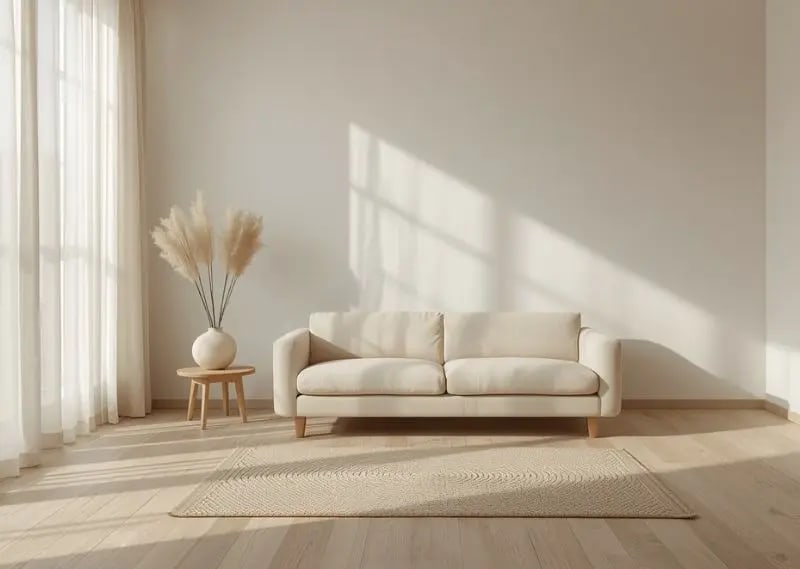
Nothing clusters here. Nothing competes. The furniture sits low, keeping the eye grounded. The textiles are cream and warm oat — colours that feel like they grew rather than were manufactured. This is a room that asks nothing of you, and that's exactly the point.
2. The Moss Wall Bedroom
Sage green walls meet a bed frame in smoked ash, and the whole thing could easily feel a bit precious — but then you notice the moss. Preserved moss panels arranged in a framed grid on one wall. Not plants you have to water or worry about, just the texture and colour of the forest, held in place. It's quietly radical.
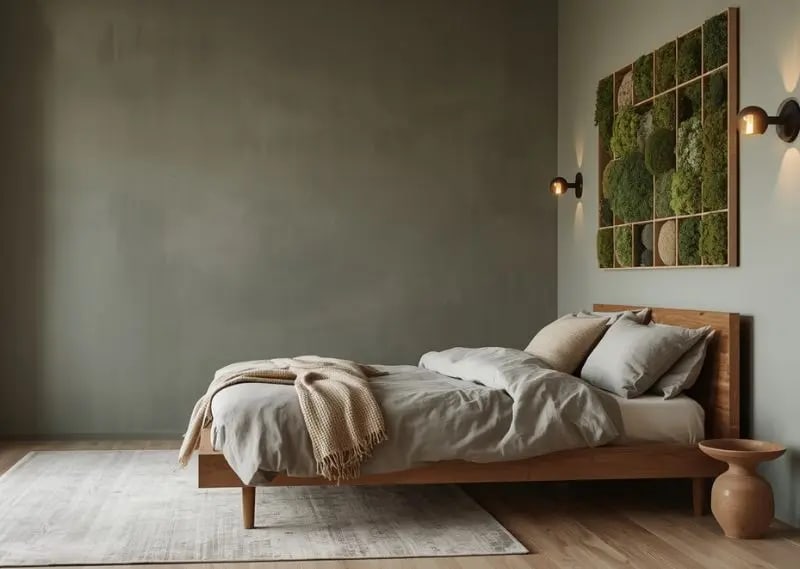
The shou sugi ban finish on the wood — that charred, darkened technique from Japanese architecture — gives it weight. The bedding layers linen over waffle-knit over bouclé, all in tonal shades. You barely notice the variety until you're in it, and then you understand why the room feels so restful.
3. The Stone Basin Bathroom
A bathroom that has removed everything it didn't need — and found something better on the other side. A freestanding stone basin. One timber shelf. A single folded linen towel. Walls in large-format concrete tiles that manage to absorb both sound and light in equal measure.
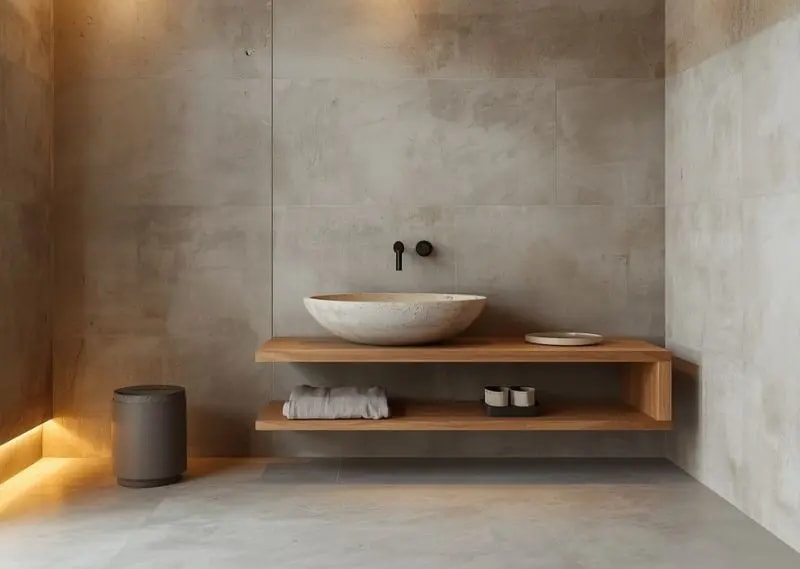
The fixtures are matte black, slender, architectural. There's no surface clutter because there's no surface for it — shelving is recessed, hidden, out of the equation. You walk into this bathroom and feel your shoulders drop. That's the whole design brief.
4. The Sunlit Tea Corner
This might be the most quietly joyful space on the list. A small reading nook — the kind you might have otherwise ignored — reimagined as a Japanese tea corner, or chanoma. A low cushioned bench. A shoji-inspired screen filtering the afternoon sun into something soft and golden. A single artisan ceramic cup sitting on a low table at cushion height.

No chairs. No overhead light fighting the afternoon. Just warm diffused light and a seat that invites you to slow down. It's remarkable how much intention fits into so little space.
5. The Open Kitchen in Charcoal and Oak
This kitchen is proof that restraint and personality aren't opposites. Handleless flat-front cabinets in deep charcoal run below. Open oak shelves sit above. The cooking tools, the appliances, the visual noise — all of it is tucked away. What remains on those shelves is genuinely beautiful: a few ceramic bowls, a bamboo utensil holder, nothing more.

The countertops are stone or concrete with visible veining. Not pristine. Not trying to hide what they're made of. The kitchen works hard and looks like it knows it.
6. The Futon-Inspired Platform Bed
Inches from the floor. That's really the whole idea here. The mattress on slatted wood, no box spring, no frame, no headboard demanding attention. Just a bed that trusts the floor and the space around it.
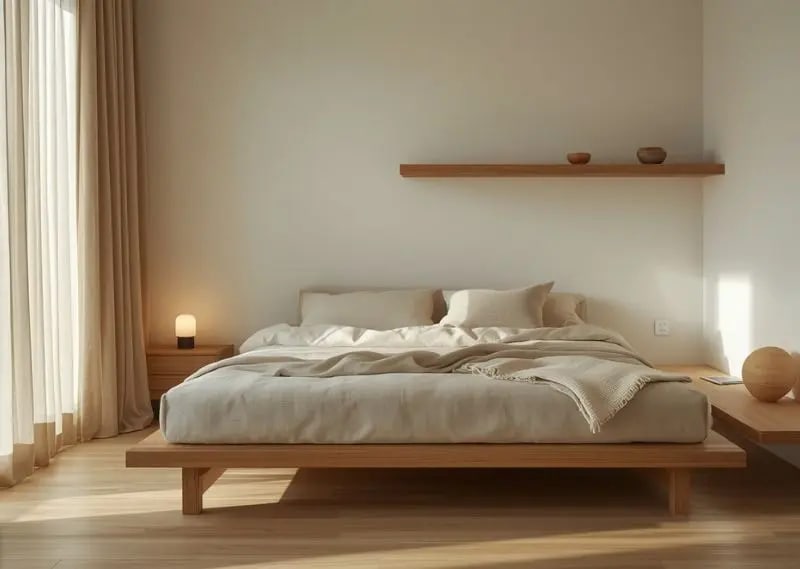
In solid oak, walnut, or bamboo, a platform like this reads as both humble and considered. Floating shelves replace nightstands — less bulk, more breathing room. Blackout linen curtains pool slightly on the floor, which in any other context might seem like a mistake. Here it just looks like the room is exhaling.
7. The Gallery Hallway
Hallways are so often forgotten. This one isn't. A single large-format art print, mounted flush to the wall with no frame or with the simplest possible border. The floor continues through without interruption, making the narrow space feel longer and more intentional. One low bench. A woven basket on top.
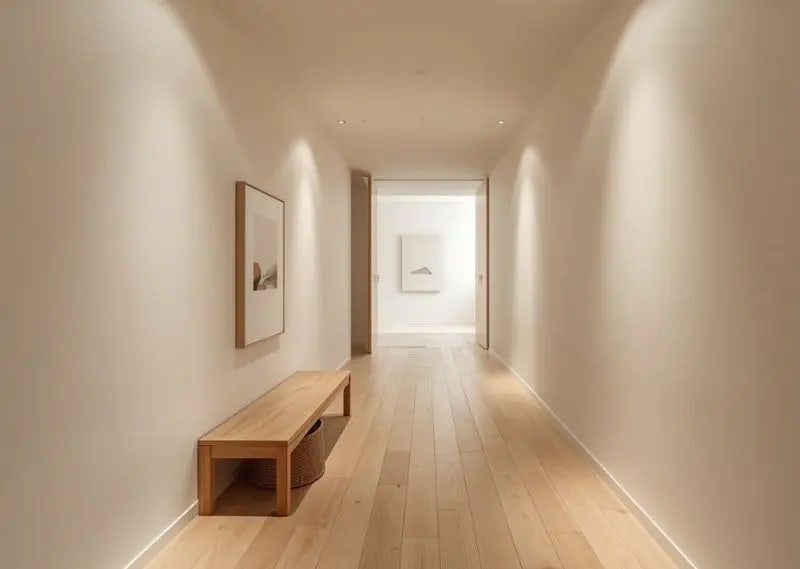
That's it. The absence of things is the design.
8. The Wabi-Sabi Dining Room
Here is where the philosophy gets its most literal expression. An oval dining table in live-edge walnut — and not just any live edge, but one where the cracks in the wood have been filled with aged resin rather than hidden. The table's imperfection is the centerpiece. The tree's original form is honoured.
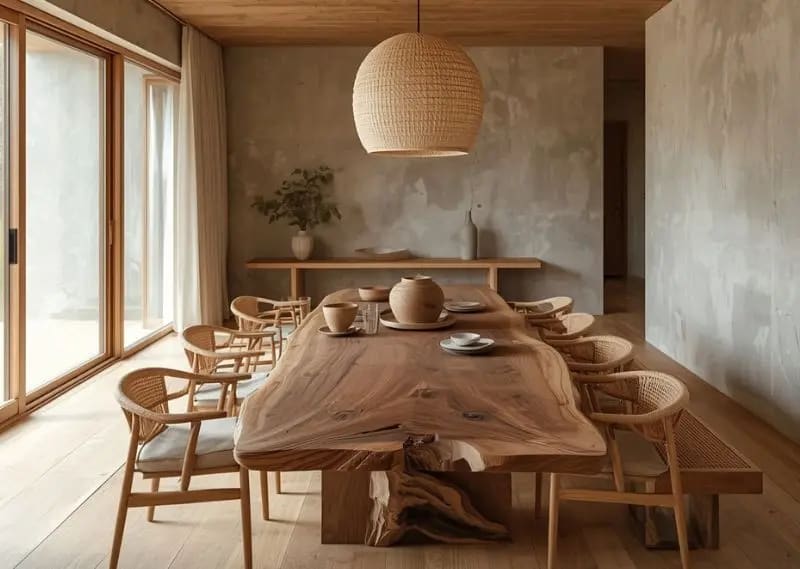
Rattan and linen chairs surround it, some mixed with a cushioned bench. A pendant in woven bamboo or rice paper hangs overhead. This room doesn't pretend the wood was ever perfect. That's exactly why it's beautiful.
9. The Moody Study
Productivity and stillness sitting in the same room — that's the trick this space pulls off. A deep walnut desk faces a wall in soft charcoal plaster. Shelves hold only the books currently being read; everything else lives behind closed doors. The desk surface is kept intentionally clear.
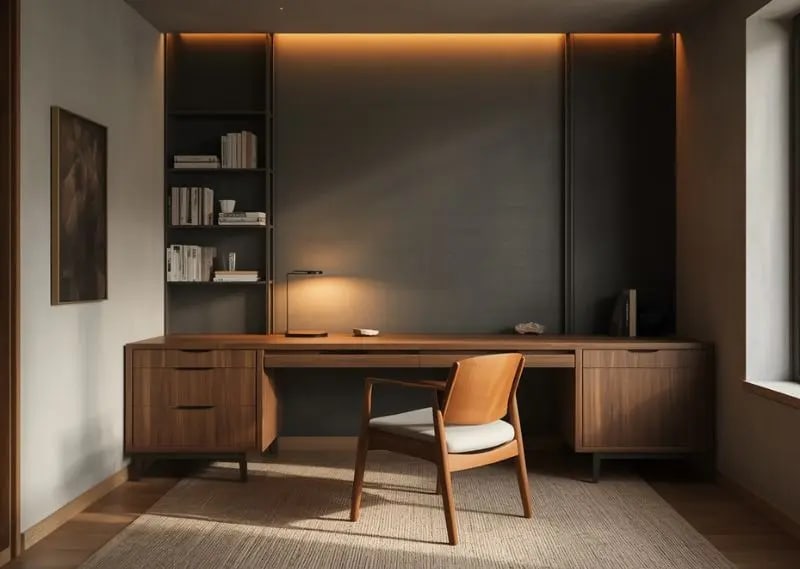
The lighting is warm amber only — no cool white, no fluorescent anything. This is a room designed around the idea that good work happens when the environment doesn't distract you from thinking.
10. The Stone Floor Meditation Room
No furniture. None. Just a smooth stone floor, a rolled linen mat, a candle, and a small bronze bowl on a low shelf. Nothing competes for your attention because there is nothing left to compete.
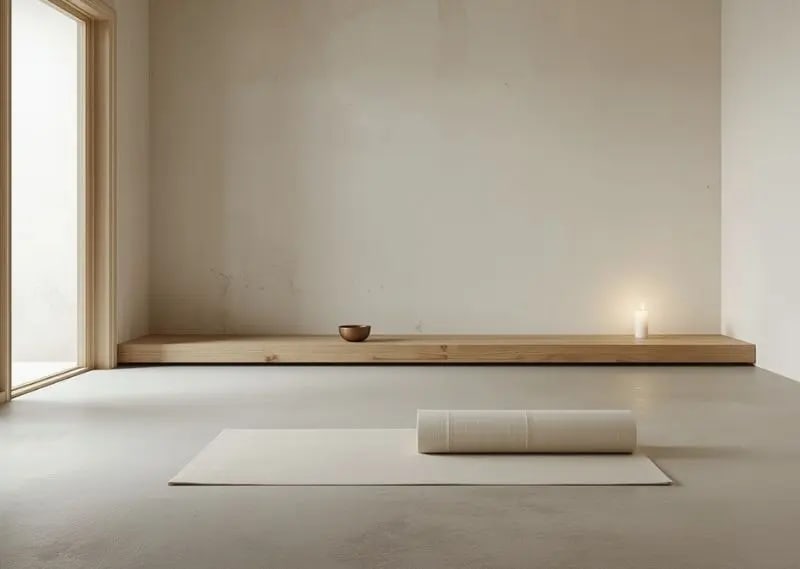
Heated stone or polished concrete underfoot means this works in any season. No technology. No artificial light sources. Just a room that has been emptied of everything except the quiet. It's one of those spaces where you can only understand it by sitting in it.
11. The Courtyard-View Living Room
Floor-to-ceiling glass opens onto a private courtyard. Inside: a single Japanese maple. White gravel. The room's furniture faces outward, toward the view, not toward a screen.
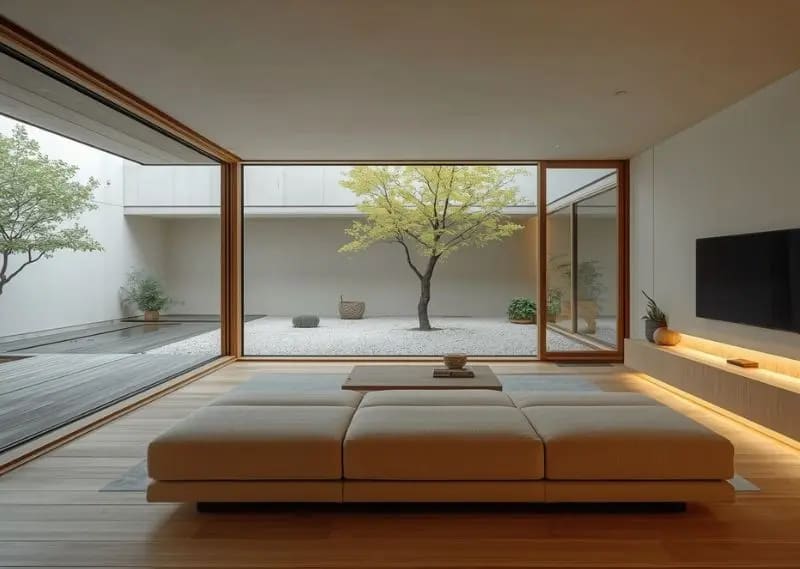
Inside and outside blur into one composition, and the maple is the artwork. Interior planting mirrors what's beyond the glass. There's a term for the sliding door style — engawa — borrowed from traditional Japanese architecture, and it captures exactly what this room is doing: making the threshold between inside and outside feel like a choice rather than a wall.
12. The Curved Clay Fireplace
Everything else in this living room has stepped back. The freestanding clay fireplace — hand-sculpted, soft, rounded at every edge — has stepped forward. It's a sculpture. It's warmth. It's the thing you look at when you walk in and the last thing you look at before you leave.

Curved forms do something interesting in a room full of angles: they give the eye somewhere to rest. A single large natural stone slab defines the hearth area below. That's all the room needs.
13. The Linen-Curtained Kitchen
This one breaks the rule and makes it work. Instead of open shelves, long linen curtains conceal the lower storage. Stone-washed, undyed, hanging with easy weight. What's exposed above is kept deliberately spare. The handmade ceramic dishes that are on display don't feel like clutter — they feel like art.
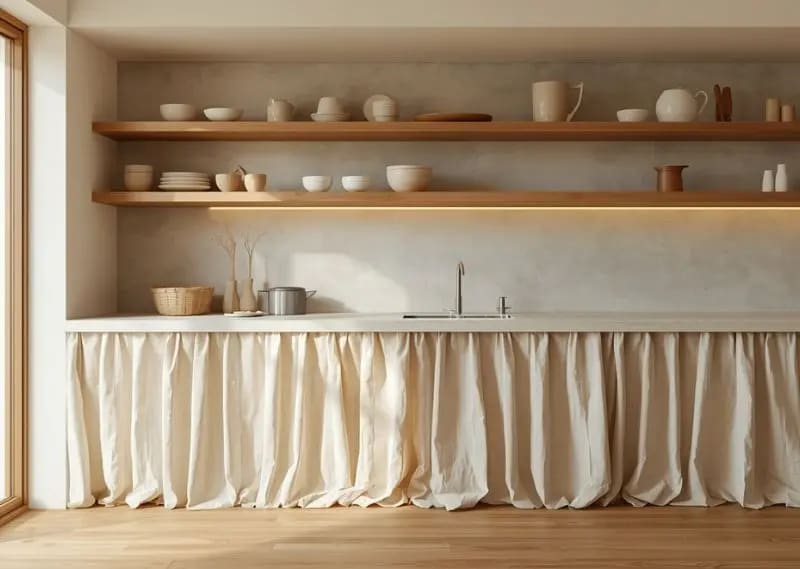
The kitchen becomes softer. Quieter. A textile installation that happens to contain your cooking equipment.
14. The Bamboo Ceiling Bedroom
The walls are bare. Completely bare. Because the ceiling is doing everything. Strips of natural bamboo run its full length — warm, rhythmic, unexpected. The bed is low, in natural wood tones, and the whole room lets the ceiling breathe without competition.
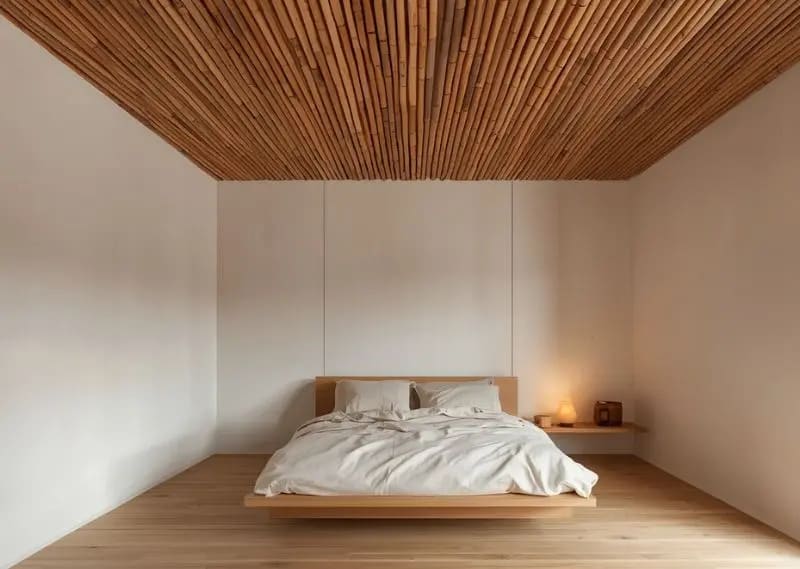
It's a reminder that texture doesn't have to be at eye level to transform a space.
15. The Entryway as Ritual Space
Genkan is the Japanese concept of an entryway as a threshold — the place where the outside world is left behind and home begins. This interpretation nails it. A single wooden bench at sitting height for removing shoes. A narrow console. An ikebana arrangement — the Japanese practice of intentional flower placement — in a minimal bud vase.
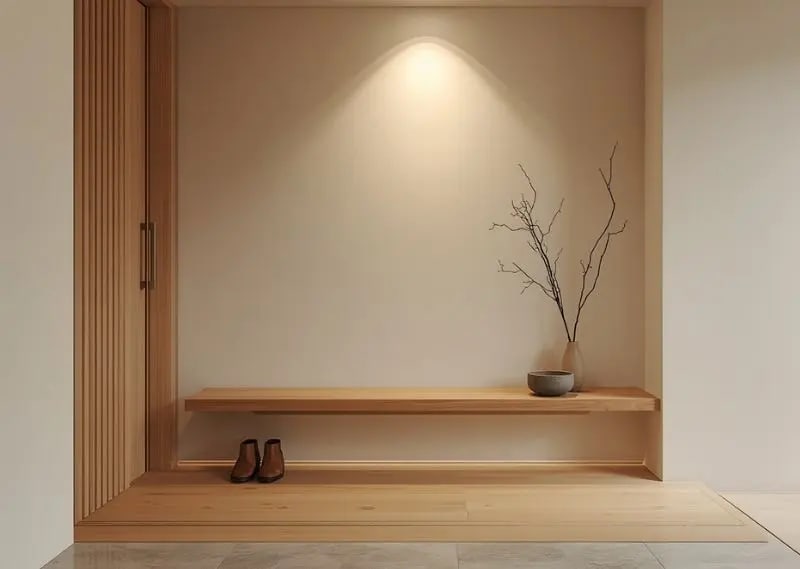
You're not just walking in. You're arriving. There's a difference, and this entryway insists on it.
16. The Sunken Seating Lounge
A conversation pit, slightly below floor level, lined with cushioned benches in warm taupe boucle. No television. No coffee table. No agenda.
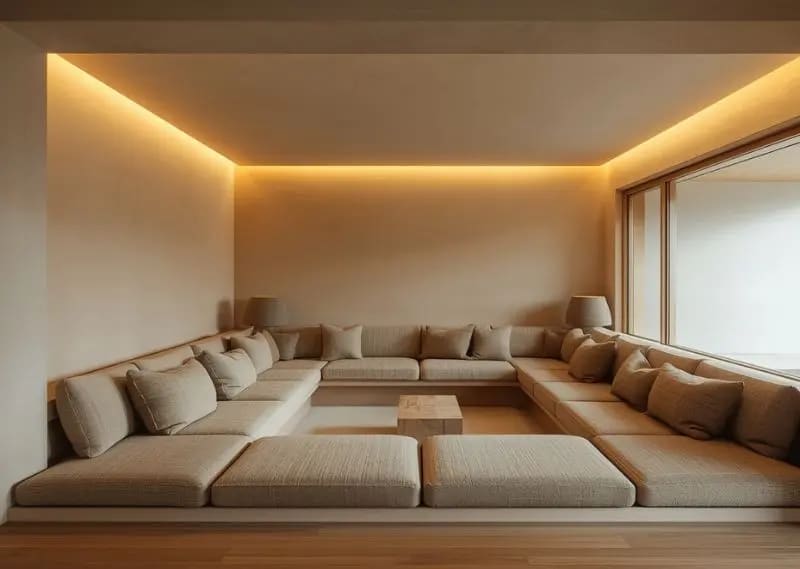
The architecture of the space communicates its purpose before anyone sits down: this room is for being with people. The sunken floor creates an intimacy that furniture alone can't manufacture. Come in, sit close, stay a while.
17. The Paper Lantern Dining Space
Oversized washi paper lanterns at varying heights above a simple dining table. At dusk, they don't just illuminate the room — they transform it. The whole space goes soft and luminous, like eating by moonlight.
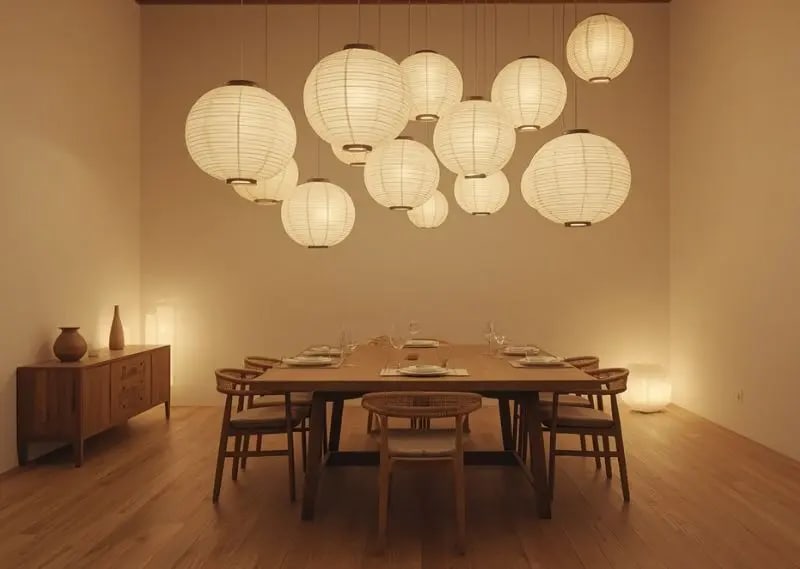
The table is raw or lightly oiled wood. Candlelight fills in where the lanterns leave off. This is a room that understands atmosphere as a material.
18. The Architect's Bathroom
Concrete walls. A hinoki cypress soaking tub. The scent of that wood — cedar-adjacent, clean, ancient — fills the room before you even turn on the water.
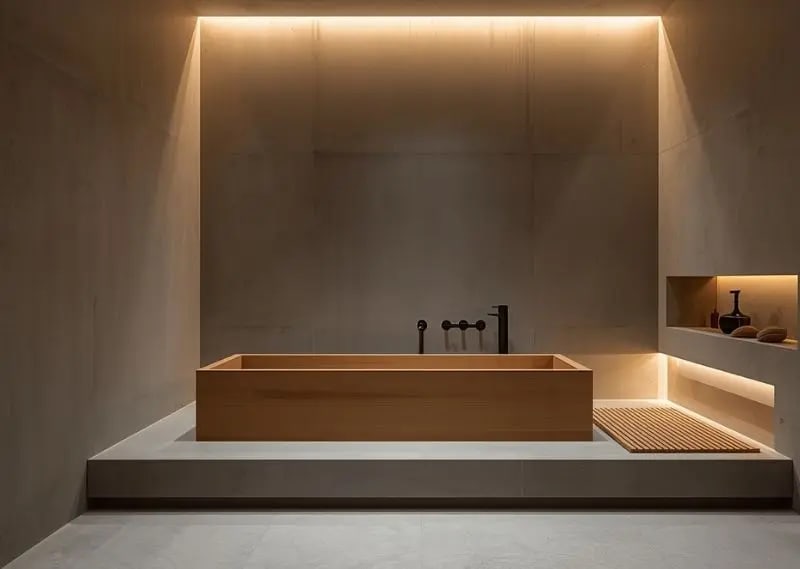
This is a bathroom that takes bathing seriously. Every sense gets considered: the temperature of the walls, the grain of the wood, the silence. One slatted wood mat on the floor. No bath rug. Nothing soft that doesn't belong.
19. The Children's Room Done Right
This might be the one that surprises people most. A Japandi child's room isn't stark or severe — it's simply considered. A low bed the child can climb into independently. A few well-loved toys on an open shelf, rotated so the space never gets chaotic. Warm wood tones, soft materials in wool and cotton, nothing toxic or plasticky.
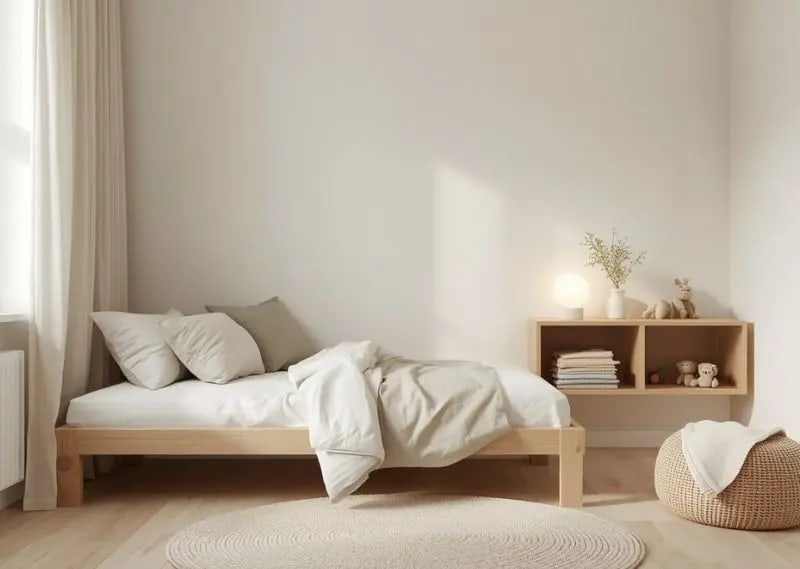
Children deserve calm environments too. This room gives them that without making it feel like a showroom.
20. The Rooftop Japandi Terrace
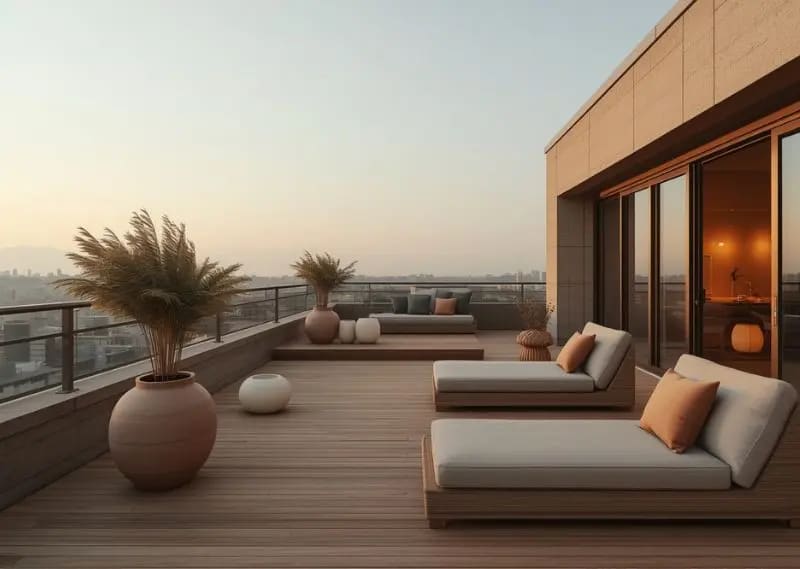
Outside, same rules. A timber deck in teak or cedar. A few low chairs in weathered rattan. One ceramic planter with a single ornamental grass chosen purely for its form. The sky is the decoration, and the rest of the design is just thoughtful enough not to compete with it.
So how do you actually start?
The good news is you don't have to gut your home. Japandi is less about buying the right things and more about removing the wrong ones.
Start with subtraction. Clear your surfaces before you buy anything new. A bare surface already feels more Japandi than a surface covered in new purchases. Pull your colour palette down to three or four tones and commit to them.
When you do invest, go for natural materials. Oak, walnut, bamboo, ash for your wood. Travertine, slate, concrete for stone surfaces. Linen, cotton, wool, and bouclé for textiles — earthy tones, undyed if possible.
Think carefully about your lighting. Layer it: ambient, task, warm accent. Ditch the harsh overhead light or at least supplement it with lower, warmer sources. Candles are never wrong here.
And embrace the imperfection. The handmade ceramic with the slightly uneven rim. The wood with the visible grain and the old mark that won't sand out. The finish that's softened with time. These aren't flaws you're tolerating — they're the whole point.
Japandi design is built around a question that sounds simple and isn't: what if less really was more?
In a world that keeps adding, keeps accumulating, keeps filling every surface and every silence, these spaces offer something genuinely rare. Not emptiness — intentional space. Not deprivation — mindful abundance. The quiet confidence of a room that knows exactly what it is and needs nothing else.
Whether you take one idea from this list or let it change the way you think about your home entirely, the core lesson is the same: choose slowly, choose well, and let what's left speak for itself.
If you want to go deeper, look into the work of Japanese architect Kengo Kuma or Danish designer Cecilie Manz. Both are working in that same quiet register, and both will give you a lot to think about.
🌿 Outdoor Living & Landscaping Ideas
• 25 Stunning Landscaping Ideas for Your Lawn & Garden (Backyard, Patio & Outdoor Spaces 2026)
• 25 Pool Designs That Will Transform Your Backyard in 2026 (Luxury to Budget Ideas)
• 30 Cozy Patio Decor Ideas: Create a Relaxing Outdoor Oasis at Home
• 15 Best Furniture Sets for Every Space: Patio, Living Room, Bedroom & Outdoor Living
🛋️ Living Room & Small Space Design
• Transform Your Space: Best Floor Lamps for Living Room in 2026
• 15 Best Sofas for Small Living Rooms That Maximize Space & Style
• Best Space Saving Furniture for Living Room in 2026 for Small Apartments
• Small Room? These Cozy Corner Ideas Will Completely Change How It Feels
🛏️ Bedroom Decor & Organization
• Aesthetic Bedroom Ideas for Small Rooms: Dreamy & Cozy Decor Guide
• Floating Shelves for Bedroom: Best Picks + Stylish Ideas (2025 Guide)
• Small Bedroom Ideas for 2026: Maximize Style & Space
• 10 Bedroom Wall Decor Ideas for Small Rooms (Budget-Friendly & Modern 2026)
• 20 Best Wall Decor Ideas for Bedroom Walls (Stylish & Easy Upgrades)
• 5 Boho Bedroom Wall Décor Ideas for 2026
• Tired of Your Bedding Letting You Down? Meet Your Dream All-Season Solution.
🏡 Home Decor & Interior Inspiration
• 23 Iranian Home Decor Interior Design Ideas That Bring Timeless Elegance
• 21 Artificial Flora for Home Decor (Stylish, Low-Maintenance Greenery for Every Room)
• 10 Stylish Neutral Home Office Designs for Men That Boost Focus and Comfort
🧺 Home Organization & Smart Storage
• Ultimate Home Organization Guide for Beginners (2026)
• 7 Genius Storage Tricks That Double Your Toddler's Floor Space
🛁 Bathroom & Seasonal Decor
• 7 Bathroom Remodel Design Ideas to Transform Your Space in 2026
• 7 Valentine Home Décor Ideas to Create a Romantic, Cozy & Pinterest-Worthy Space
• Top 5 Valentine’s Day Home Decor Ideas to Create a Romantic Atmosphere


0 Comments