
Your backyard is more than a patch of grass. It is untapped potential — a private sanctuary waiting to be shaped. And in 2026, pool design has evolved far beyond the standard rectangular blue box. Whether you have a $5,000 budget or a $500,000 blank check, there is a pool concept that will turn your outdoor space into something genuinely breathtaking.
This guide covers 25 distinct pool designs — real, buildable, and graded from ultra-luxury to genuinely affordable — with practical details that most listicles skip entirely. You will find specific materials, approximate cost tiers, space requirements, and the honest trade-offs of each design so you can walk into a contractor conversation already informed.
Let us get into it.
Part 1: Luxury Pool Designs (Budget: $80,000–$500,000+)
These designs are for homeowners with generous budgets and a desire to make a bold architectural statement.
1. The Infinity Edge Pool with Vanishing Horizon
Also called a negative-edge or zero-edge pool, this design creates the illusion that water spills off the edge and merges with the landscape beyond — typically a hillside, ocean view, or valley.
What makes it special in 2026: Designers are now pairing infinity edges with LED color-shifting systems that allow the waterline to change hue at sunset, matching the sky. The result is a cinematic, almost surreal visual effect.
Practical reality: This pool requires a catch basin below the vanishing edge, a powerful recirculation pump, and a hillside or elevated grade. Building on flat land demands a raised structure, which adds cost. Expect $150,000–$400,000 depending on size and site work.
Best for: Homes with elevated terrain or panoramic views.
2. The Sunken Conversation Pool (Swim-Up Lounge)
Imported from high-end resort design, this concept integrates a shallow-water lounge area directly into the pool — typically 18–24 inches deep — with built-in submerged seating, umbrella sleeves, and in-water tables. Guests can sit waist-deep with drinks in hand.

What makes it special in 2026: New hydrophobic upholstery materials allow actual cushioned underwater seating that does not degrade. Some builds add built-in wireless speakers with underwater audio transmission.
Practical reality: The shallow zone needs its own filtration circuit to prevent bacterial buildup from heavy skin contact. Budget $90,000–$180,000 for a well-executed version.
Best for: Homeowners who entertain frequently.
3. The Glass-Wall Pool
One or more sides of the pool are made from thick structural glass panels (typically 2–3 inches of tempered, laminated glass), so the pool interior is visible from below-grade viewing areas or from a lower level of the home.
What makes it special in 2026: Architects are now building glass-wall pools that span from an interior room — think a living room or gym — outward, so the pool appears to begin inside the house. The visual of water at eye level while standing indoors is genuinely stunning.

Practical reality: Installation is extremely complex. Glass panels require custom steel framing, silicone bonding, and underwater lighting to make the view usable. Budget $200,000–$500,000+.
Best for: Luxury homes with basement-level living spaces or hillside architecture.
4. The Baja Shelf Resort Pool (Luxury Relaxation Redefined)

Also known as a tanning ledge pool, this design focuses less on deep swimming and more on shallow-water relaxation. A wide, flat platform (typically 6–12 inches deep) extends from the pool edge, allowing you to lounge partially submerged in water — like your own private resort.
What makes it special in 2026
In 2026, Baja shelves are no longer just add-ons — they are becoming the centerpiece of pool design. Homeowners are integrating built-in loungers, umbrella sleeves, and even shallow water fire bowls. LED bubblers and gentle jets now turn the ledge into a soft hydro-massage zone, making it perfect for long, relaxing afternoons.
Practical reality
While visually simple, the shelf requires precise leveling and additional plumbing for bubblers and jets. It also reduces the overall swimming depth, so this design prioritizes relaxation over active swimming.
Best for
Families, sun-lovers, and homeowners who want a resort-style lounging experience at home.
Cost range
$80,000–$160,000 depending on size, materials, and added features.
5. The Natural Infinity Stream Pool
Instead of a static basin, this design incorporates a flowing stream channel — sometimes 50–100 feet long — that meanders through the yard before widening into a swimming pool. Think of it as a private river.
What makes it special in 2026: New aquatic plant integration systems allow actual live plantings along the stream edges without compromising filtration. The result looks like a natural creek that happens to be perfectly swimmable.
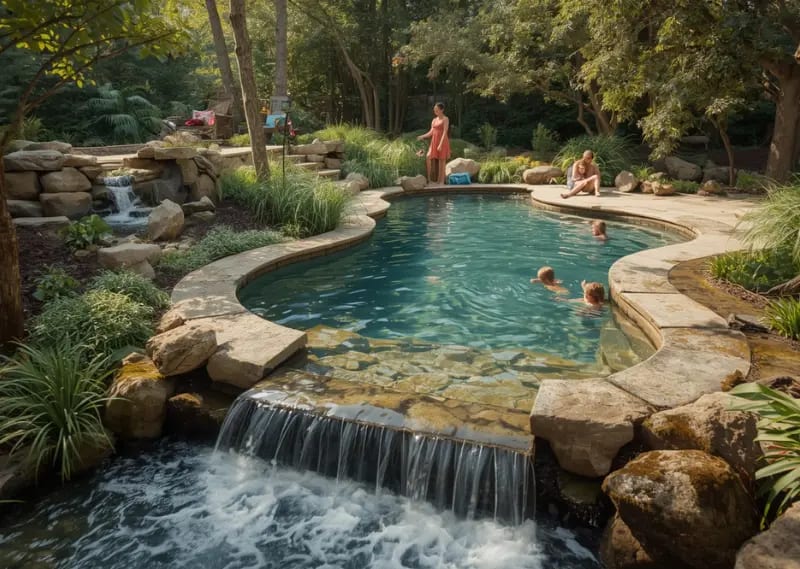
Practical reality: Requires significant grading, stream channel construction, and a powerful recirculation system. Budget $120,000–$300,000 depending on length and landscaping.
Best for: Large lots (0.5+ acres) with naturalistic landscaping.
Part 2: High-End Pools (Budget: $40,000–$80,000)
These are premium builds for serious homeowners — not budget options, but not stratospheric either.
6. The Geometric Lap Pool with Motorized Cover
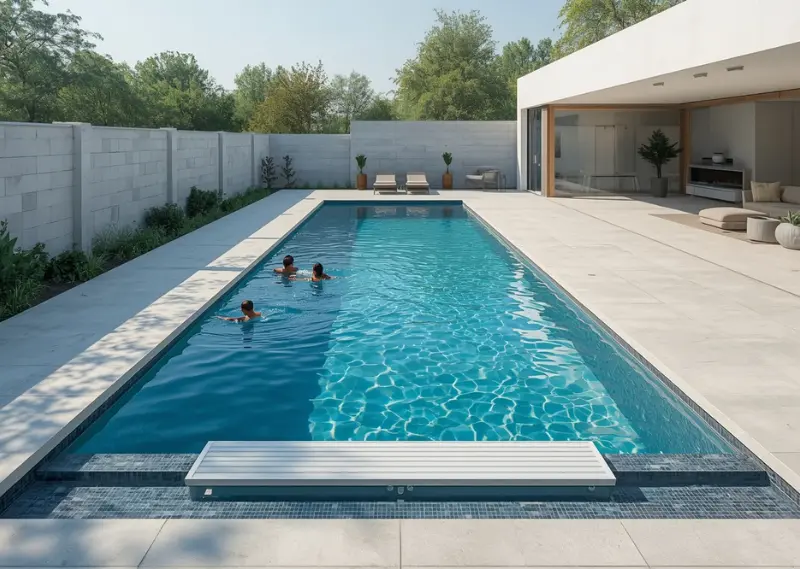
A long, narrow lap pool (typically 40–75 feet by 8–10 feet) with a motorized safety and insulation cover that disappears into a deck slot at the push of a button. Clean, minimal, and extraordinarily functional.
What makes it special in 2026: Solar-thermal motorized covers now provide enough insulation to extend the swimming season by 6–8 weeks in temperate climates, slashing heating costs significantly.
Best for: Fitness-oriented homeowners with narrow or rectangular lots.
Cost range: $45,000–$75,000.
7. The Plunge Pool with Hot-Cold Contrast Circuit
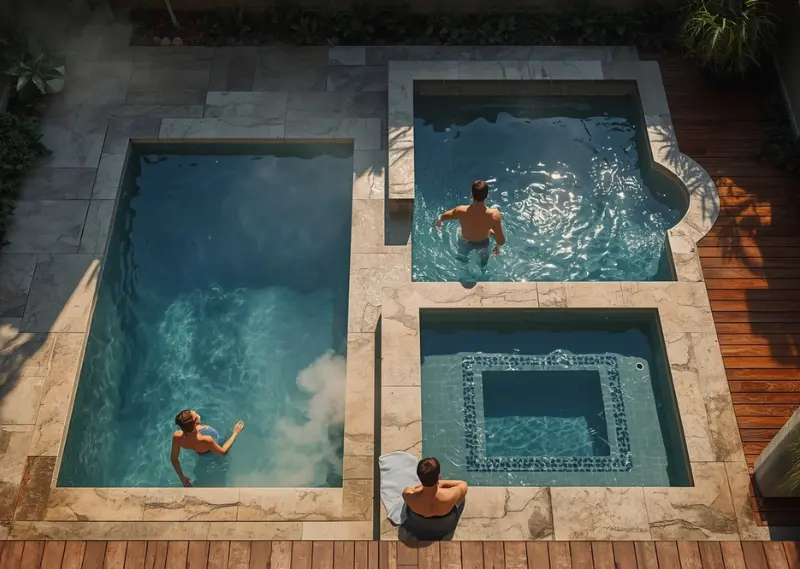
A compact plunge pool (8 x 12 feet is typical) fed by a separate chiller unit that maintains water at 50–60°F, paired directly with a hot tub or sauna. The contrast therapy circuit — cycling between cold plunge and heat — has become one of the most requested wellness features of 2026.
What makes it special in 2026: The cold plunge wellness trend has moved from athletic recovery facilities to residential backyards en masse. Compact, purpose-built plunge pools now include digital temperature control and scheduling.
Practical reality: The chiller unit is the key cost driver. Quality units run $5,000–$12,000 on their own. Full installation with decking and the hot tub pairing: $40,000–$65,000.
Best for: Health-focused homeowners with limited backyard space.
8. The Dark-Bottom Reflective Pool
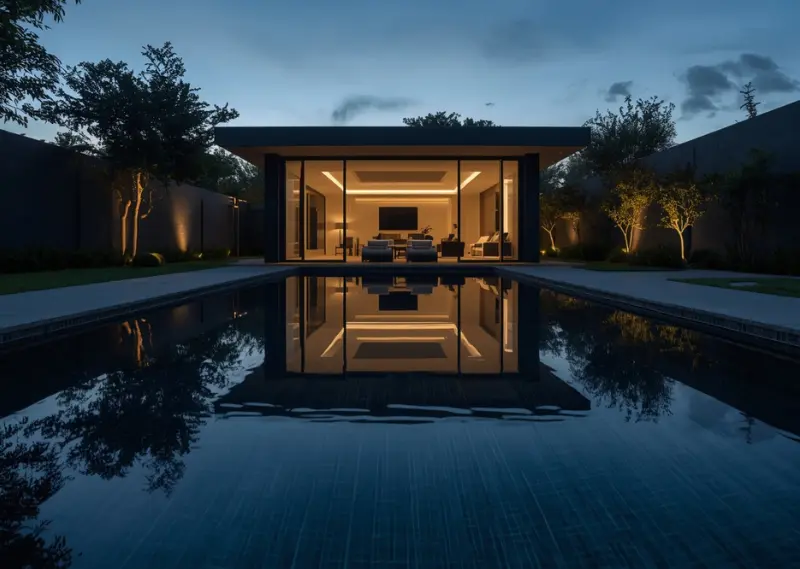
A pool finished with dark charcoal, black, or deep navy plaster or tile creates a mirror-like surface that reflects the sky, surrounding trees, and architecture. The aesthetic is dramatic, moody, and deeply photogenic.
What makes it special in 2026: New dark aggregate plasters (pebblesheen in volcanic black, for example) absorb solar heat 20–30% more efficiently than white plaster — meaning lower heating bills alongside the visual payoff.
Practical reality: Dark finishes show calcium deposits and algae more visibly. Requires more diligent maintenance. Budget $50,000–$80,000 depending on size.
Best for: Modern or minimalist architectural styles.
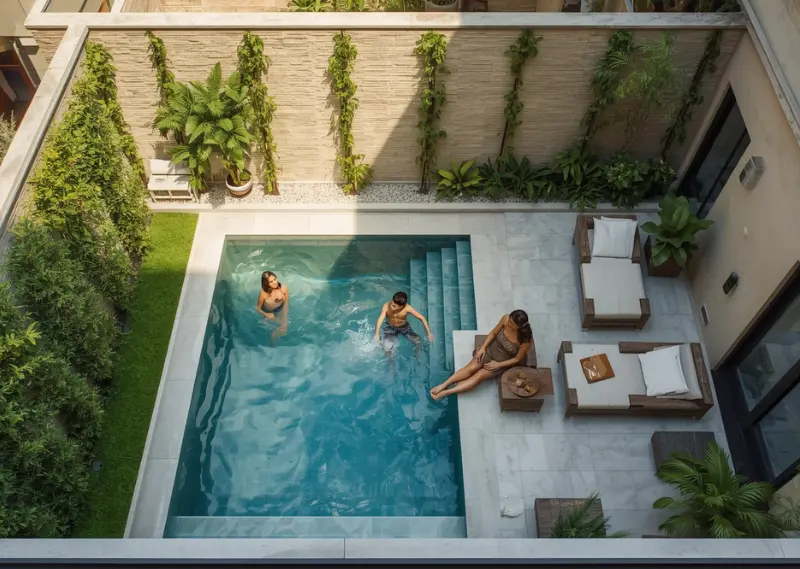
9. The Courtyard Pool with Surrounding Logia
A pool sized specifically to fit within an enclosed courtyard — often 12 x 20 feet to 15 x 30 feet — surrounded on three or four sides by covered logia (colonnaded walkways with shade), creating a Mediterranean or Spanish hacienda atmosphere.
What makes it special in 2026: Outdoor ceiling fans, retractable shade sail systems, and misting lines integrated into the logia make this a genuinely all-day, all-season outdoor room rather than just a pool surround.
Best for: Homes with Spanish, Mediterranean, or traditional architectural styles.
Cost range: $55,000–$90,000 including surrounding structures.
10. The Rooftop Pool
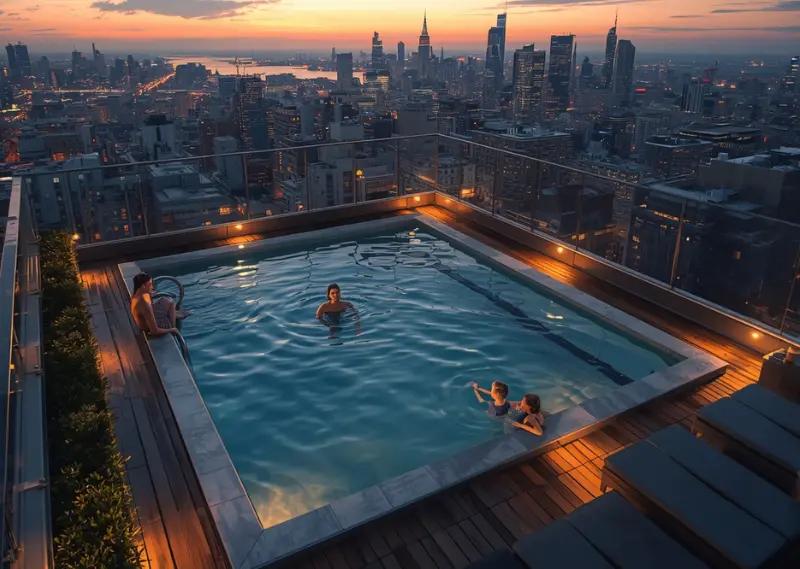
For urban homeowners, the roof becomes the backyard. Rooftop pools require structural engineering for load bearing, waterproofing systems, and often local permitting, but the result — swimming above a city skyline — is incomparable.
What makes it special in 2026: Prefabricated stainless steel rooftop pool shells have reduced installation timelines from months to weeks, and their lighter weight compared to concrete expands the range of buildings that can support them.
Best for: Urban townhouses, flat-roof homes, and rooftop terraces.
Cost range: $60,000–$150,000 depending on engineering requirements.
Part 3: Mid-Range Pool Designs (Budget: $20,000–$40,000)
The sweet spot — real pools with genuine personality that do not require an inheritance.
11. The Freeform Lagoon with Grotto
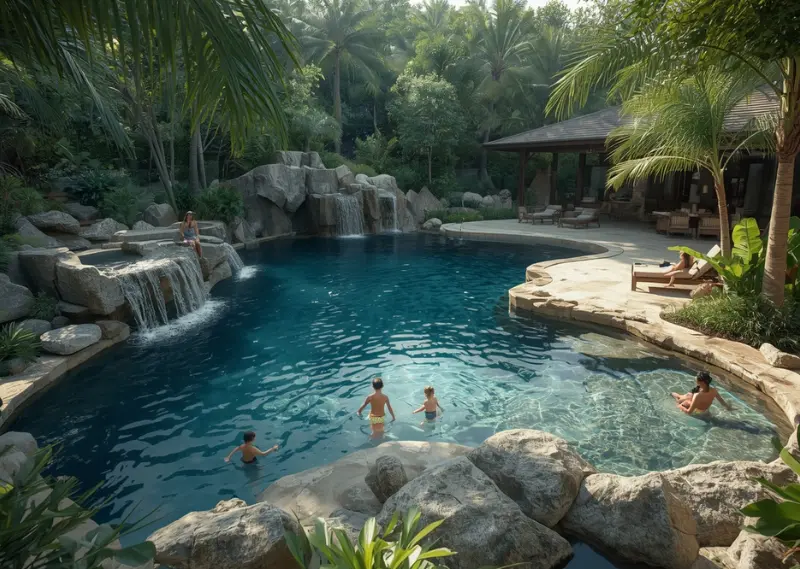
Shaped like a natural pond with organic curves, boulders, and a small waterfall or grotto alcove, this design brings a tropical resort feel to suburban backyards. Artificial rock work (typically gunite over rebar formed into rock shapes) creates the grotto effect.
What makes it special in 2026: LED lighting inside grottos with color programming has become extremely affordable, creating magical after-dark effects for under $2,000 added to the total project.
Best for: Families with children and naturalistic landscaping.
Cost range: $28,000–$50,000.
12. The Pool with Attached Spa and Spill-Over Jets
A classic done right — a 12 x 24 foot pool with an elevated attached hot tub that spills water over a waterfall lip into the main pool. In 2026, the pairing of variable-speed pumps and smart thermostats has made the combined pool-spa system dramatically more energy efficient.
What makes it special in 2026: New variable-speed pump technology has cut energy costs for pool-spa combinations by up to 70% versus older single-speed pumps. Smart systems allow you to schedule heating, set temperatures remotely, and receive maintenance alerts via smartphone.
Best for: Couples and families who want both lap swimming and relaxation.
Cost range: $30,000–$55,000.
13. The Exercise Pool with Swim-Against-Current System
Also called a swim spa or counter-current pool, this is a shorter pool (12–15 feet) equipped with powerful jets that create a continuous current to swim against — like a swimming treadmill.
What makes it special in 2026: Modern counter-current systems now generate up to 2,200 gallons per minute of flow, enough to challenge competitive swimmers. Combined with underwater treadmill attachments, they double as aqua fitness centers.
Practical reality: Jet systems require powerful plumbing and frequent seal maintenance. Budget for annual servicing. Full installation: $22,000–$40,000.
Best for: Fitness swimmers with small backyards.
14. The Spool (Spa-Pool Hybrid)
Smaller than a pool, larger than a spa — typically 10 x 14 feet with a depth of 4–5 feet — the spool is heated to a comfortable 95–100°F and functions as a year-round soaking and light-exercise pool. It has exploded in popularity in 2025–2026 because it solves the problem of the pool you only use three months a year.
What makes it special in 2026: Spool heating via heat pump technology has become so efficient that year-round operation in most climates costs $30–$70 per month — genuinely affordable.
Best for: Small lots, couples, or homeowners in colder climates who want year-round use.
Cost range: $18,000–$35,000.
15. The Cocktail Pool with Tanning Ledge
A compact pool (10 x 20 feet is typical) that features a raised tanning shelf — a 6–12 inch deep platform running along one end — where people can lie on submerged loungers while partially in the water. Maximizes relaxation in minimal space.
What makes it special in 2026: Bubblers (small fountain jets installed in the tanning shelf) are now a nearly universal inclusion, turning the shelf into a gentle bubble-massage area. Cost to add: $500–$1,500.
Best for: Small backyards and social homeowners who prioritize lounging over laps.
Cost range: $22,000–$38,000.
16. The L-Shaped Pool
An L-shaped layout divides the pool into distinct zones — a deeper swimming zone and a shallower play zone — without requiring additional construction. The layout fits awkward or corner lots extremely well.
What makes it special in 2026: Pool designers are using the inner corner of the L as a natural location for a built-in fire pit, outdoor kitchen counter, or shade structure, turning the dead corner into a feature.
Best for: Irregular or corner lots, families with mixed-age children.
Cost range: $25,000–$45,000.
Part 4: Budget-Friendly Pool Designs (Under $20,000)
Real pools. Real results. Genuine creativity on a tight budget.
17. The Plunge Pool (Compact Concrete or Fiberglass)
A plunge pool in the $10,000–$20,000 range is one of the most underrated decisions a homeowner can make. At 7 x 12 feet, it fits nearly any backyard, provides genuine cooling and soaking, and can be finished beautifully.
What makes it special in 2026: Pre-engineered fiberglass plunge pool shells (made off-site and craned into a pre-dug hole) have dramatically reduced installation time — many are water-ready in 3–5 days. This cuts labor costs and minimizes backyard disruption.
Practical reality: At this size, you are soaking and cooling — not lap swimming. Set expectations accordingly.
Best for: Urban backyards, renters converting to owners, first-time pool buyers.
Cost range: $10,000–$20,000.
18. The Stock Tank Pool (Galvanized Steel)
Agricultural stock tanks — large galvanized steel water troughs used for livestock — have become a genuine design-forward budget pool option. A 10-foot diameter stock tank holds 1,800 gallons and can be fitted with a recirculating pump and filter for a perfectly functional small pool.
What makes it special in 2026: Manufacturers have started producing stock tanks with pre-drilled pump ports, pre-painted interiors in designer colors (matte black, terracotta, sage green), and coordinated decking kits — turning what was a DIY hack into an intentional design statement.
Practical reality: Lifespan is 5–15 years with proper care. Not a permanent structure, but not a temporary one either.
Best for: Renters, small patios, and design-forward homeowners on tight budgets.
Cost range: $600–$4,000 complete.
19. The Above-Ground Pool with Custom Deck Integration
Modern above-ground pools — particularly those with resin or steel walls in neutral colors — can be transformed by building a wrap-around wood or composite deck that frames and integrates the pool into the yard. What looks like a cheap pool becomes a design feature.
What makes it special in 2026: Round and oval above-ground pools paired with full-perimeter floating decks are becoming a genuine aesthetic choice, not just a budget fallback. Composite deck materials that mimic teak or ipe now cost significantly less than the real thing.
Practical reality: Above-ground pools have shorter lifespans than in-ground (10–20 years vs 25–50+) and limited resale value contribution. Budget for eventual replacement.
Best for: Families with young children, homeowners who may move within 10 years.
Cost range: $3,000–$12,000 including deck.
20. The Shipping Container Pool
Repurposed 20-foot or 40-foot steel shipping containers, lined with a custom fiberglass insert or sprayed foam and epoxy, create surprisingly elegant lap pools at a fraction of traditional construction costs. The container's structure eliminates most excavation and concrete work.
What makes it special in 2026: Companies have emerged that deliver pre-finished container pools — already insulated, lined, fitted with filtration, and painted — ready to drop into a pre-leveled pad. Turn-key delivery has made this a legitimate option for homeowners who want a lap-length pool without a $50,000 construction project.
Practical reality: A 20-foot container pool is exactly 8 feet wide — narrow but swimmable. Positioning is permanent once set.
Best for: Fitness swimmers, industrial or modern aesthetic homes, budget-conscious buyers.
Cost range: $8,000–$18,000 installed.
21. The Natural Swimming Pool (NSP)
A natural swimming pool replaces chlorine and chemical filtration with biological filtration — a dedicated "regeneration zone" planted with aquatic plants that naturally clean the water. The result looks and functions like a pristine swimming pond.
What makes it special in 2026: NSP technology has matured dramatically. Modern biological filtration systems maintain water clarity equivalent to chemically treated pools, and new plant-selection databases allow designers to choose species appropriate for any climate zone.
Practical reality: Requires more land (the regeneration zone typically equals 50% of the swimming zone in area). Initial establishment takes one full season for plant root systems to mature. Long-term operating costs are significantly lower than chemical pools.
Best for: Eco-conscious homeowners with space and patience.
Cost range: $15,000–$40,000 depending on size.
Part 5: Specialty & Thematic Pool Designs
These pools have a specific concept or function that sets them apart from standard builds.
22. The Japanese Onsen-Style Pool
Inspired by traditional Japanese hot spring baths, this design emphasizes simplicity, natural materials, and meditative calm. Typically rectangular with bamboo, natural stone, wooden decking, and minimal ornamentation. Water temperature is maintained at 100–104°F.
What makes it special in 2026: Western wellness culture has fully embraced onsen bathing as part of the broader mindfulness movement. Authentic Japanese design elements — including wooden soaking tubs (ofuro) positioned adjacent to the main pool — are being integrated into residential builds.
Best for: Wellness-oriented homeowners, those with Japanese or minimalist design aesthetics.
Cost range: $25,000–$60,000.
23. The Indoor Pool with Dehumidification System
A fully enclosed pool within the home — typically in a dedicated addition or basement — provides year-round swimming regardless of climate. The key engineering challenge is humidity management: indoor pools generate enormous moisture loads that damage structures without proper dehumidification.
What makes it special in 2026: Commercial-grade residential dehumidification systems have become both more compact and more energy-efficient, making indoor pools a practical reality for homes in northern climates where outdoor pools are usable only 4–5 months per year.
Practical reality: Building costs are the sum of the pool plus the enclosure plus the HVAC. Budget $80,000–$250,000+.
Best for: Cold climate homeowners, serious swimmers, and luxury estates.
24. The Fire and Water Feature Pool
This design pairs the pool with dramatic fire elements — gas-fueled fire bowls, fire walls, or torch sconces positioned at pool's edge — creating a spectacular contrast between fire and water, particularly after dark.
What makes it special in 2026: Automated fire-and-water systems with smartphone control allow homeowners to ignite fire features and activate waterfalls or fountains simultaneously, creating programmed "scenes" for entertaining.
Practical reality: Fire elements require dedicated gas lines and proper setbacks from structures. Budget $5,000–$20,000 on top of the base pool cost for quality fire features.
Best for: Entertaining-focused homeowners, evening swimmers.
25. The Kiddie Splash Zone with Integrated Family Pool
Rather than a simple kiddie pool, this design integrates a dedicated zero-depth splash and play zone — including spray jets, shallow wading areas, and water play features — directly adjacent to or connected with the main adult swimming pool, with a physical step or barrier separating the zones.
What makes it special in 2026: New modular play water feature kits allow homeowners to add splash pads, dump buckets, and spray arches to existing pools or new builds without custom fabrication, dramatically reducing the cost of creating a genuinely fun family water environment.
Best for: Families with children ages 2–10, community-minded homeowners.
Cost range: $30,000–$60,000 for the integrated design.
Key Decisions Before You Build: What Most Guides Skip
Before you fall in love with a specific design, there are four decisions that will determine whether your pool is a joy or a regret.
Gunite vs. Fiberglass vs. Vinyl Liner: Gunite (concrete) is the most customizable and durable — shaped in any form, finished in almost anything — but costs the most and takes 3–6 months to build. Fiberglass shells are pre-manufactured, arrive faster, resist algae better, and have lower long-term maintenance costs, but limit you to available shell shapes. Vinyl liner pools are the most affordable in-ground option but liners need replacement every 10–15 years.
Saltwater vs. Chlorine: Saltwater pools use a chlorine generator that produces chlorine from dissolved salt — the water feels noticeably softer on skin and eyes, and you avoid handling concentrated chemical chlorine. The system costs more upfront ($1,500–$2,500 for the generator) but saves on chemical costs and handling over time. Saltwater does not mean chlorine-free; it simply automates chlorine production.
Heating: Heat pumps have become the gold standard for pool heating in 2026. They are 5–6 times more energy efficient than gas heaters — meaning for every $1 of electricity, you get $5–$6 worth of heat. The tradeoff is they heat more slowly and work less effectively in very cold weather. Solar heating is the lowest operating cost option but weather-dependent and requires significant roof or ground space for collectors.
Energy: Variable-speed pumps are mandatory in most US states now (California has required them since 2010, and other states have followed). If a contractor proposes a single-speed pump, walk away or insist on an upgrade. The operating cost difference over 10 years is often $5,000–$10,000 in electricity savings.
2026 Pool Design Trends Worth Knowing
A few broader trends are shaping what pools look like and how they work this year:
Biophilic integration: the deliberate blurring of pool and nature — is the dominant aesthetic of 2026. Moss walls, living plant walls, natural boulders, and aquatic plantings around pool edges are replacing traditional concrete coping and sterile tile surrounds.
Wellness over swimming: is reshaping how people think about pools. The cold plunge, the contrast circuit, the meditation reflection pool, the resistance swim — buyers increasingly want their pool to serve a health function, not just be a place to cool off in summer.
Automation and remote management: are now standard expectations. If a pool system cannot be monitored and controlled from a smartphone, most buyers in 2026 consider it outdated.
Smaller footprint, higher quality: is the dominant budget philosophy. A brilliantly finished 12 x 20 foot pool with exceptional lighting, automation, and surrounding landscape beats a poorly finished 16 x 32 foot pool in every meaningful way.
Final Thought
The best pool is not the biggest or the most expensive — it is the one that matches how you actually live. A fitness swimmer needs a lap pool or counter-current system. A family with small children needs shallow play zones and safety features. A couple who wants year-round use needs a heated spool. A host who entertains every weekend needs the swim-up lounge.
Choose the design that serves your real life, not the imagined version of your life. That is the pool that will still excite you fifteen years after it is built.
🌿 Outdoor Living & Landscaping Ideas
• 25 Stunning Landscaping Ideas for Your Lawn & Garden (Backyard, Patio & Outdoor Spaces 2026)
• 30 Cozy Patio Decor Ideas: Create a Relaxing Outdoor Oasis at Home
• 15 Best Furniture Sets for Every Space: Patio, Living Room, Bedroom & Outdoor Living
🛋️ Living Room & Small Space Design
• Transform Your Space: Best Floor Lamps for Living Room in 2026
• 15 Best Sofas for Small Living Rooms That Maximize Space & Style
• Best Space Saving Furniture for Living Room in 2026 for Small Apartments
• Small Room? These Cozy Corner Ideas Will Completely Change How It Feels
🛏️ Bedroom Decor & Organization
• Aesthetic Bedroom Ideas for Small Rooms: Dreamy & Cozy Decor Guide
• Floating Shelves for Bedroom: Best Picks + Stylish Ideas (2025 Guide)
• Small Bedroom Ideas for 2026: Maximize Style & Space
• 10 Bedroom Wall Decor Ideas for Small Rooms (Budget-Friendly & Modern 2026)
• 20 Best Wall Decor Ideas for Bedroom Walls (Stylish & Easy Upgrades)
• 5 Boho Bedroom Wall Décor Ideas for 2026
• Tired of Your Bedding Letting You Down? Meet Your Dream All-Season Solution.
🏡 Home Decor & Interior Inspiration
• 20 Japandi Interiors That Perfectly Blend Scandinavian Simplicity & Japanese Elegance
• 23 Iranian Home Decor Interior Design Ideas That Bring Timeless Elegance
• 21 Artificial Flora for Home Decor (Stylish, Low-Maintenance Greenery for Every Room)
• 10 Stylish Neutral Home Office Designs for Men That Boost Focus and Comfort
🧺 Home Organization & Smart Storage
• Ultimate Home Organization Guide for Beginners (2026)
• 7 Genius Storage Tricks That Double Your Toddler's Floor Space
🛁 Bathroom & Seasonal Decor
• 7 Bathroom Remodel Design Ideas to Transform Your Space in 2026
• 7 Valentine Home Décor Ideas to Create a Romantic, Cozy & Pinterest-Worthy Space
• Top 5 Valentine’s Day Home Decor Ideas to Create a Romantic Atmosphere


0 Comments